
Untreated wastewater may contain bacteria that are resistant to antibiotics. This is often overlooked, but it is a major source of pollution in Norwegian fjords. New findings from the Institute of Marine Research show that such bacteria are also found in the Arctic.
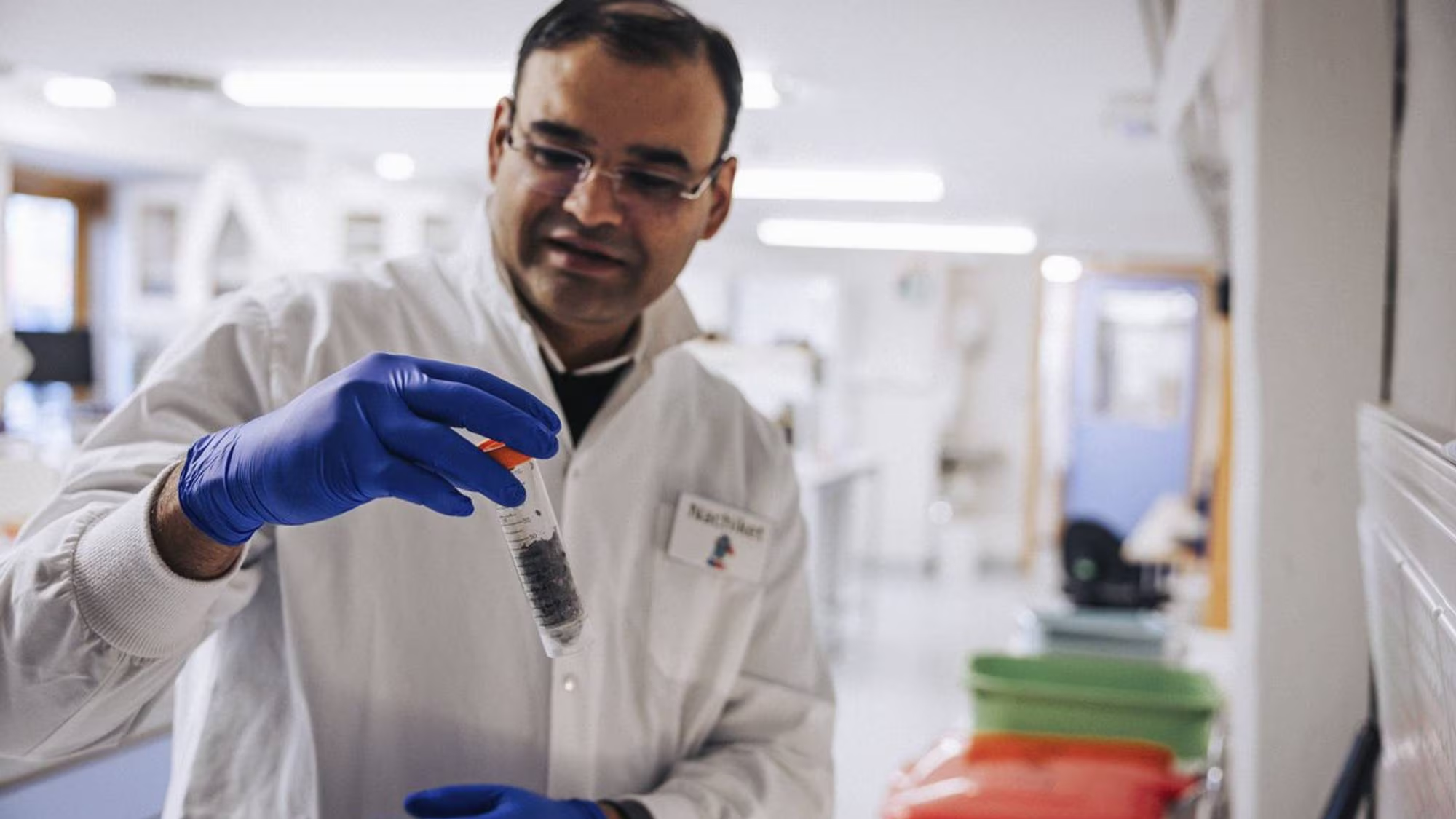
Modern genetic technology makes it possible to identify all the genes present in samples taken from the natural environment. Researcher Nachiket Marathe and his team have applied this technology to sediments in Adventfjorden near Longyearbyen. They found many types of antibiotic resistance genes that are significant in a medical context.
"Such genes can occur naturally, but their spread accelerates significantly when untreated sewage is discharged into the fjords. Climate change and increased tourism also contribute to this. Both residents and visitors bring bacteria from other places, and these eventually end up in the sewage. When sewage flows directly into the fjords, the amount of resistant bacteria increases. Warmer fjords can also make it easier for the bacteria to survive and spread their resistance to other bacteria," Marathe says.
Wastewater treatment plants are part of the challenge
Marathe and his research team are also studying bacteria in wastewater in Bergen, in collaboration with The City of Bergen. They are analyzing the effluent from the city’s five wastewater treatment plants.
“Sometimes we’ve found the same bacterial strains that were previously detected in patients. This shows that current wastewater treatment methods aren’t effective enough at removing bacteria. Most treatment plants are designed to remove nutrients and organic matter, not to disinfect the water. There are also no requirements for disinfection, and implementing it is costly,” says Marathe.
What goes around comes around - to the dinner table
Antibiotic-resistant bacteria that end up in the ocean can also be found in seafood.
“We’ve seen that these bacteria can be resistant to heavy metals, and that some carry genes that can make us ill,” he says.
The Institute of Marine Research monitors antibiotic resistance in seafood and serves as Norway’s reference laboratory in this field.
“Contaminated seafood can affect our health. Protecting the ocean therefore means we are also protecting ourselves,” he says.
A One Health challenge
Marathe emphasizes that we must keep the ocean as clean as possible to prevent future health challenges. This year’s theme for One Ocean Week is “A Safe and Predictable Ocean.” He believes we must understand how important the ocean is to public health and reduce pollution to ensure safe seafood and a clean ocean in the future.
"This shows that we need to adopt a One Health approach. That means we view the health of humans, animals, and the environment as a whole." Marathe concluded.
Facts about antibiotic resistance
- Antibiotics are essential in modern medicine and are used, among other things, to treat wounds and perform major surgeries.
- When bacteria are exposed to antibiotics over time, they can develop resistance to the treatment.
- Such resistant bacteria make infections harder to treat.
- If we do not prevent the spread, resistant bacteria can spread throughout the community.
- In its Global Antibiotic Resistance Surveillance Report 2025, the WHO reports that 1.14 million deaths were linked to bacterial antibiotic resistance.