
Text and photo: HåvardThe City of Bergen
The seabed in Vågen is heavily polluted, but it is also rich in cultural heritage sites. Now, the “Cleaner Bergen Harbor” project will investigate what lies beneath the surface.
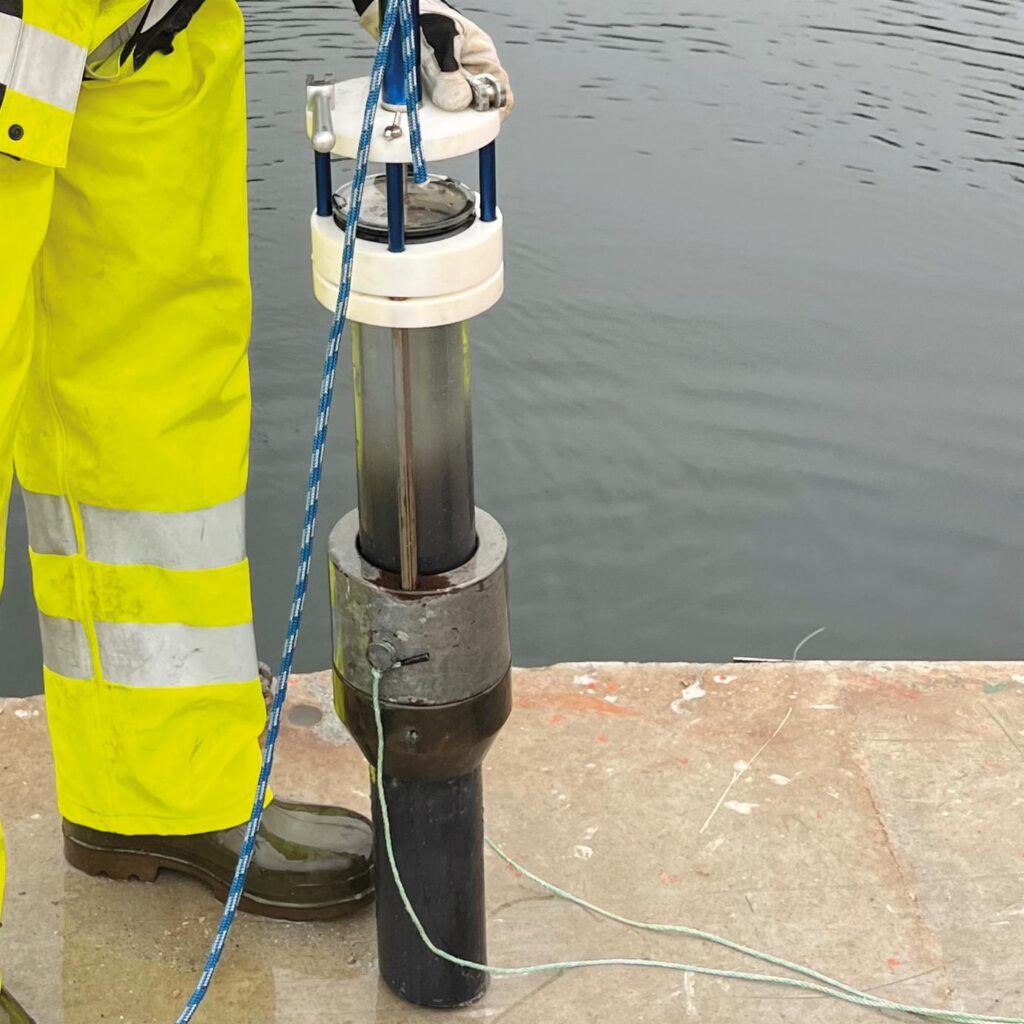
PHOTO: COWI
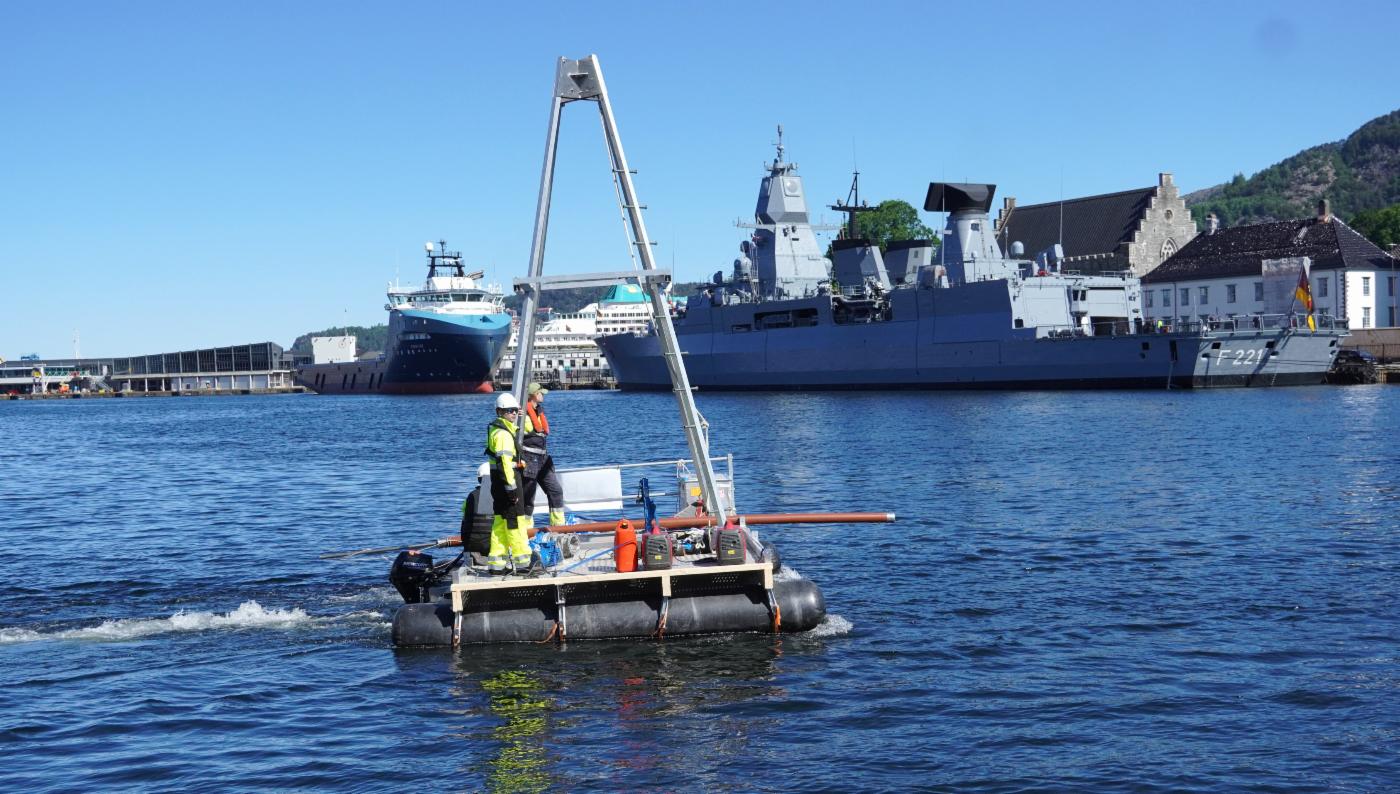
From June 15 to 19, teams from the University of Bergen and COWI will take core samples from a raft at five locations in Vågen.
Core samples are collected by pressing a tube into the seabed and pulling it back up. This yields a column containing layers from the seabed. The samples are transported to shore and examined by experts from the Bergen Maritime Museum and the Norwegian Institute for Cultural Heritage Research (NIKU).
“This is the start of a very exciting study that could provide us with new insights into Bergen’s earliest history. It will be of interest both to the people of Bergen and to those far beyond the city’s borders,” says Anne Christine Knag, head ofthe City Environment Agency’s “Cleaner Bergen Harbor” project.
Reads the teams like a history book
The core samples reveal the composition of the sediments, the extent of seabed contamination at various depths, and whether there are traces of past activity and cultural heritage sites.
“The archaeologists from the Bergen Maritime Museum and NIKU open the pipe and read the layers like a history book,” says Knag.
At the same time, the samples provide us with a better understanding of the contamination. This makes it easier to plan safe diving operations and the handling of the material that is recovered.
The core samples are just the beginning. An underwater archaeological excavation is planned for this fall at Nykirkekaien.
"We have funding for this first phase, but we need government support to complete the entire study," says the project manager.
The plan also includes excavations at Bradbenken, Zachariasbryggen, and Bryggen.
That is why we must study cultural heritage sites
"Cleaner Bergen Harbor" is first and foremost an environmental project. The goal is to achieve a clean seabed in Vågen, just as in Store Lungegårdsvannet and Puddefjorden.
At the same time, the seabed is part of the medieval city of Bergen and is therefore protected. For this reason, cultural heritage surveys are required before any measures can be taken.
The Bergen Maritime Museum conducted a preliminary marine archaeological survey in 2009 and 2010. It revealed that there are many artifacts on the seabed.
“Here we find traces of a thousand years of urban life, dramatic events, trade, and port activity—and large quantities of artifacts. There are a lot of ceramics, chalk pipes, and metal objects,” says Knag.
This is Cleaner Port Bergen
- Part of a national initiative to prevent the spread of environmental toxins from contaminated seabeds.
- To ensure good environmental conditions and safe use of the marine areas in the inner part of Byfjorden.
- The work includes, among other things, the removal of waste and the capping of contaminated soil.
- Implemented by The City of Bergen collaboration with several partners, with support from the Norwegian Environment Agency.