
On Monday, April 20, the ocean will take center stage as a strategic, scientific, and industrial priority. As part of the One Ocean Summit, decision-makers, researchers, and business leaders will gather at the Radisson Blu Hotel in Bergen for three parallel sessions addressing some of the most pressing ocean-related challenges of our time.
The three parallel sessions require advance registration. You can register here.
As maritime areas become increasingly contested, climate pressures mount, and the transition to a low-emission economy gains momentum, the ocean’s role in global stability and value creation is becoming ever more important. The sessions address these challenges from three complementary perspectives: maritime security and geopolitics, scientific forecasting and future analysis for the blue economy, and clean shipping and marine innovation. Together, they provide a forward-looking picture of how cooperation, knowledge, and technology can contribute to a safe and sustainable ocean.
Session A. Maritime Security and Geopolitics in a Changing World

The session “Maritime Security and Geopolitics in a Changing World” examines how geopolitical shifts, strategic competition, and climate-driven changes affect maritime security. Maritime areas are becoming increasingly contested, and the oceans are emerging as an ever-more-important arena for national interests, global trade, and international stability.
The Naval War College organizes the session in collaboration with PwC, the Norwegian Shipowners’ Association, and the Institute of Marine Research. The event brings together senior officers from the Navy, government decision-makers, business leaders, academics, and marine researchers. This broad spectrum of perspectives combines operational experience with long-term strategic thinking.
The discussions will focus on the growing vulnerability of critical maritime infrastructure, such as shipping lanes, offshore energy facilities, and undersea communication and power cables. Increased geopolitical tensions and climate change at sea, particularly in the High North, heighten the risk of miscalculations and escalation. The speakers will emphasize that security and stability at sea require more than just a maritime presence.
International law, good governance, and cooperation between public authorities and private actors will be key topics. The session will also address the implications for shipping, energy security, the defense industry, and the management of marine resources. Participants will highlight the importance of a shared situational awareness, information sharing, and trust-based cooperation in an increasingly uncertain maritime landscape.
Session B. Predicting Our Blue Future

The session “Predicting Our Blue Future” focuses on scientific foresight. The University of Bergen is organizing the session in collaboration with DNV, the Nansen Center, NORCE, the Institute of Marine Research, and the Bjerknes Center for Climate Research.
This session explores how observation systems, modeling, and data-driven tools can provide a better understanding of future ocean conditions and support the sustainable use of marine resources. It begins with scientific perspectives on ocean observation and prediction. Leading researchers will present insights into ocean circulation, ecosystem dynamics, and the ocean’s role in the climate system.
Short scientific articles address key questions, including whether major ocean currents are weakening, how predictable marine ecosystems are in the subpolar North Atlantic, and how society can manage the fjords in a sustainable manner in a changing climate.
A moderated discussion with international experts on digital ocean systems and representatives from a youth panel will highlight the importance of real-time data, transparency, and long-term investments in ocean observation. The speakers will demonstrate how reliable forecasts form the basis for sound decisions across sectors.
The second part of the session focuses on the blue economy. Looking ahead to 2050, representatives from the OECD and DNV will present scenarios for ocean-based industries under various climate, technology, and policy trajectories. A concluding panel discussion will bring together leaders from the business and sustainability sectors to discuss how forecasts can reduce risk, guide investments, and strengthen the resilience of offshore value chains.
Session C. Clean Shipping and Marine Innovation
The session “Clean Shipping and Marine Innovation” presents concrete solutions and international collaboration to accelerate the transition to zero-emission maritime transport. Maritime CleanTech is organizing the session together with partners from the EU, the U.S., and France.
Participants include leaders from the maritime industry, technology providers, and decision-makers.
The first part of the program focuses on policies, infrastructure, and partnerships that facilitate the energy transition in the maritime sector. The speakers will present European strategies for building a competitive and sustainable maritime industry and discuss transatlantic cooperation as a driving force for scaling up green solutions in shipping. Panel discussions with industry representatives will explore how regulations, investments, and collaboration can support a rapid transition.
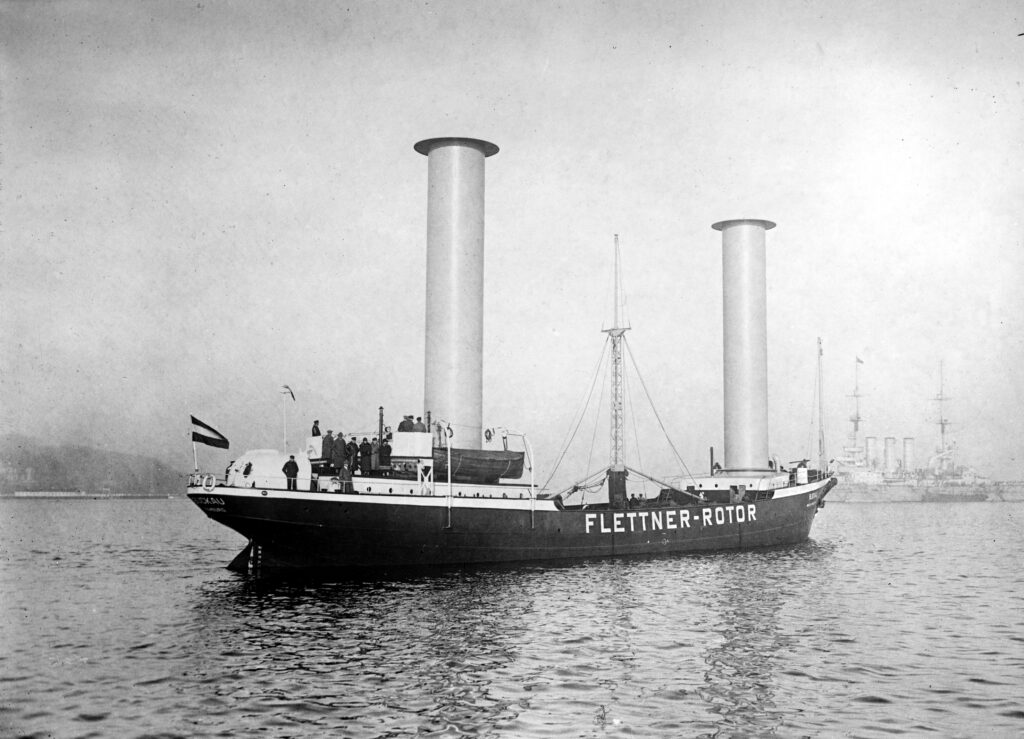
The second part highlights technology and innovation. Presentations on maritime batteries, wind-assisted propulsion, and ammonia as a fuel demonstrate how a portfolio of solutions can reduce emissions across different types of vessels. The speakers will emphasize that successful decarbonization requires technological development to go hand in hand with infrastructure and market adoption.
Throughout the session, circular solutions and ocean-based innovation will be presented as opportunities to combine ambitious climate goals with competitiveness and growth.
An Integrated Future for the Ocean
The goal is for the three sessions to demonstrate how closely intertwined today’s ocean challenges are. Ocean safety, scientific prediction, and clean technology reinforce one another and require coordinated efforts across sectors and national borders. The sessions convey a clear message: A safe, predictable, and sustainable future for the oceans depends on cooperation, a long-term perspective, and collective action in an era of rapid global change.