
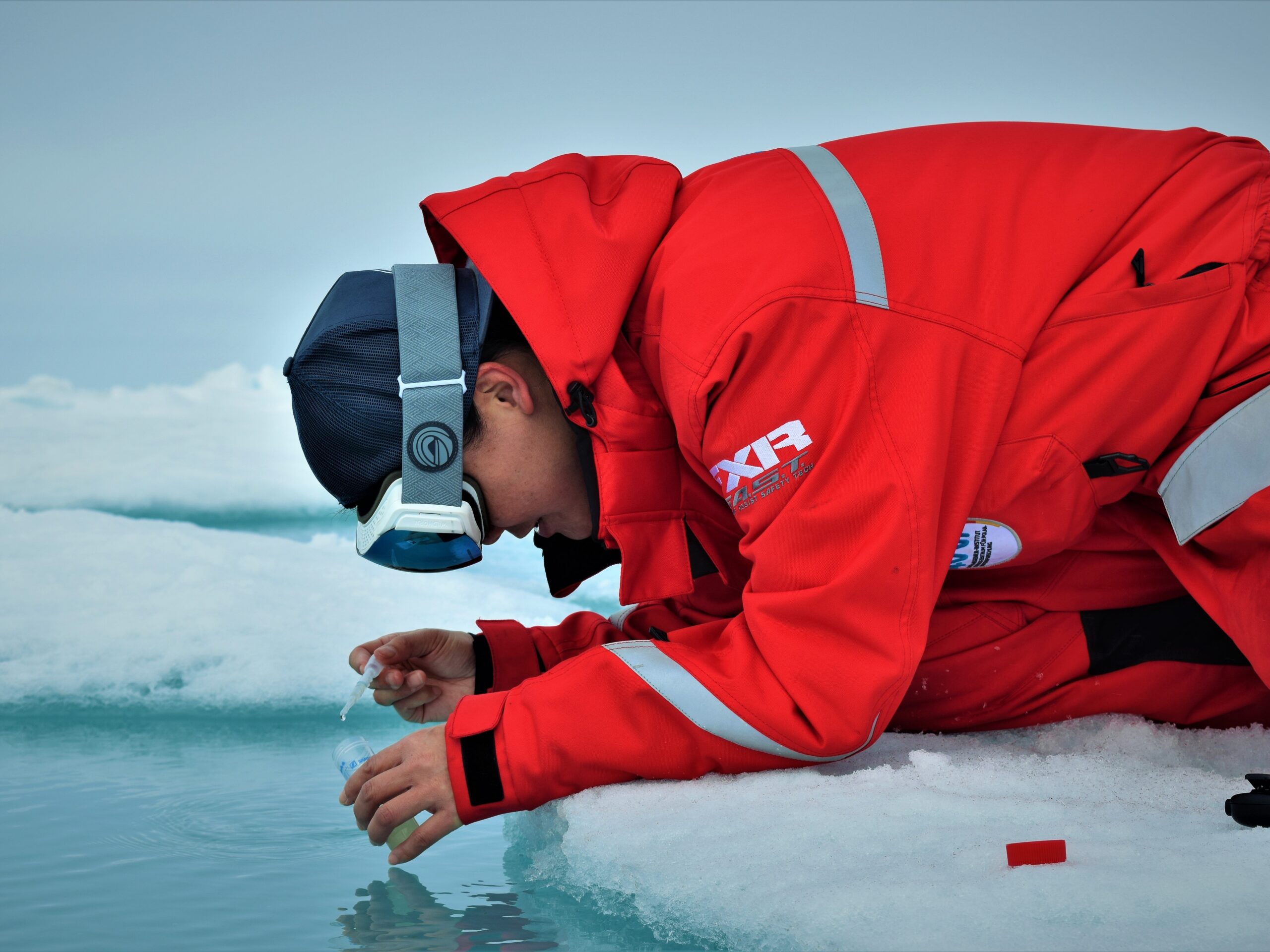
The national research project “ Polhavet 2050 ” brings together 18 Norwegian research institutions in a large, interdisciplinary collaboration aimed at strengthening Norway’s knowledge and capacity to act in a rapidly changing Arctic.
The goal is to understand the Arctic Ocean today and how it will change by 2050, and to develop the knowledge needed for future management, sustainable use, and a safe and stable Arctic region.
Ten years of collaboration from 2026 to 2035
The research project combines basic research, applied research, and innovation. “ Polhavet 2050 ” focuses primarily on processes within the Arctic Ocean itself, its interaction with surrounding ocean areas, and how this relates to climate and politics. Fieldwork will primarily take place in the Eurasia Basin, between the Fram Strait and the North Pole, including the surrounding continental slopes. Pan-Arctic perspectives are addressed through remote sensing, sociopolitical drivers, modeling tools covering the entire Arctic Ocean, and broad international research collaboration.
Public Event During One Ocean Week
The Friday event “Polhavet 2050 —What’s Happening in the Arctic, and Why Does It Matter to Us?” provides a simple introduction to the research project. Researchers Helene Langehaug, Oliver Müller, Laurent Bertino, and Dorothy Dankel will give short presentations on how new technology can provide better insight into developments in the Arctic Ocean and what these changes might mean for society.
More from the University of Bergen this week:
Connecting Arctic Hot Springs and the Search for Life in the Solar System (English)
Celebrating 150 Years of Modern Marine Research in the Nordic Seas
Underwater Communication: Mobility in Wireless Sensor Networks