
Source: hi.no
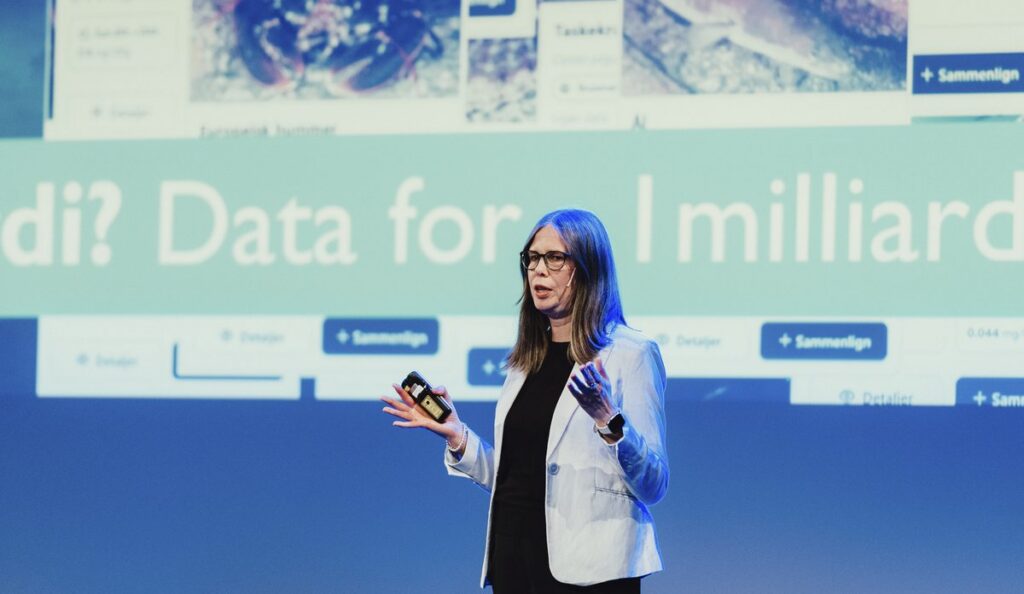
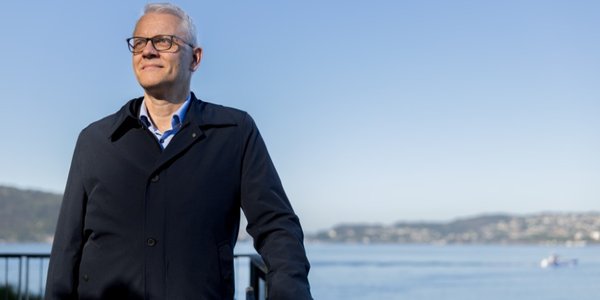
Nils Gunnar Kvamstø, Director General of the Institute of Marine Research, delivered this year's speech on health and productivity in Norway's marine and coastal areas.
In his speech, Kvamstø took stock of the health and productivity of the ocean. This year’s speech was the eighth in the series and was broadcast live from the Bergen Maritime Museum. PHOTO: Hi.no
Read the full 2026 Maritime Agreement here:
The new normal.
Has "the new normal" caught on? Has the phrase been overused?
I'm not going to ask for permission, anyway. To say that this is the new normal. In the ocean.
Welcome to Havtalen 2026—the eighth in the series.
It's hard to predict—especially when it comes to the future.
In 2013—the peak year—the cod stock exceeded 3.7 million metric tons, and a record quota of 1 million metric tons was allocated.
And back when we were supposed to say something about the future of cod. Yes, we were quite optimistic then. Because climate change—the fact that the ocean was getting warmer—would likely have a positive effect on cod.
Thirteen years have passed. And we have a sort of final assessment.
Never before have such high ocean temperatures been recorded.
We have rarely had such a low cod population.
So some things have worked out. Others haven't. Nothing that would send the project off track.
Let me put it this way:
Marine fishery resources have been cut in half. This is shown in the resource overview released by HI in February.
The biomass of the 46 most important fish stocks totaled 35 million metric tons in 2013.
The figure is now 17 million metric tons.
At its peak, there are just under 1 million metric tons of farmed salmon in the pens along the coast.
All in all, we have a living fish stock of just under 18 million metric tons, roughly speaking. In terms of export value, that amounts to 180 billion kroner.
This inventory is stored—or rather, floating—in a refrigerator kept at a nearly perfect temperature.
That's incredible. And it makes us vulnerable.
What if the thermostat breaks? Then our greatest competitive advantage—cold and fresh coastal and ocean waters—will also be lost.
Ocean systems are complex. Climate change is occurring. The effects of climate change are difficult to predict.
The new normal demands more from us: greater insight, more advanced models, and that we actually talk more about uncertainty.
And don't get me wrong here: We're not just saying, "We know too little"—and then adding, "We need to do more research."
This year's ocean speech shouldn't be about everything we don't know. My point is rather:
Knowing that we don't know—is also valuable. Provided it's used correctly—and not as a crutch. Greater uncertainty requires us to operate with wider margins. More on that later.
Let me first turn to what we do know. The Ocean Treaty is, after all, called “The State of the Ocean.” And we know that—to a large extent.
Back to the cod. In 2013, the stock was at its peak.
Since then, things have gone rapidly downhill.
Today, the cod population has almost reached a critical level.
The big question is: What happens to the young fish? Because the adult cod seem to be doing just fine. But we all know that the population needs to be replenished from the bottom up in order to remain viable over time.
Far too few cod fry live long enough to contribute to the fishable population.
Temperature fluctuations in the Barents Sea may be a major driver.
But the heat alone does not explain the difficult growing conditions.
Food availability is a factor.
Predation is another factor. A cod is a cod.
Then there’s the mackerel, with its insatiable appetite. During the 2010s, the mackerel expanded its feeding grounds, reaching as far north as the cod. Here, it may have feasted heartily on cod larvae.
Mackerel is also important in and of itself when we talk about the new normal.
The stock is now estimated at 3.2 million metric tons, down from 13 million metric tons in 2014. This means that the mackerel stock is also dangerously close to a critical level.
The countries that fish for mackerel cannot agree on a joint quota. They continue to plan for a larger catch than scientists recommend.
The same will be true in 2026. Fortunately, a good number of recruits have joined the spawning stock—that is, two-year-old mackerel.
But we can't rely on chance or luck.
That's why we also need to talk about fisheries.
Fishing is part of the picture. It doesn't explain the recruitment shortfall, but fishing is something we can actually do something about.
Reducing fishing pressure, for example, is the most important measure for preventing the cod population from shrinking further.
We can achieve lower fishing pressure in various ways. One way is to include an additional safety margin in the quotas, which acts as a buffer against the uncertainty caused by climate and other factors.
It's also about fishing better: We need to spare the small fish. Leave them alone until they've had a chance to spawn. Until they've learned to bite.
Re: In the ocean, the old ones are the oldest. Sometimes it can be good to protect old folks (of both genders).
They have more roe, spawn at different times, and in more places. They know what they're doing.
These descriptions of behavior—in juvenile fish and older fish—illustrate an important point. It’s about biology, living organisms. How fish respond when their surroundings change so rapidly—and how the ripple effects spread further. This development is rarely chronological by our standards. Nature does things its own way.
What I’ve described above—all the changes that have taken place in the ocean—have happened in a short time. Thirteen years isn’t a long time. Think back. Thirteen years ago, Erna became prime minister for the first time. The Hardanger Bridge opened. Ylvis stormed the charts with “The Fox.” So what will the next 10–13 years bring? What do we need to prepare for—starting right now?
They know what I mean. But I'm going to say it anyway. We're busy.
Management approaches are becoming obsolete more quickly—new challenges are emerging. We cannot waste time insisting on old solutions.
The management of and policies regarding fishery resources must become more flexible.
Then it’s all too easy for us to find ourselves in another bind—and be challenged on the very things that all good stewards are and should be concerned with:
predictability
and long-term thinking
It’s probably true that all of us—businesses, researchers, politicians, and administrators—needed these new solutions yesterday. The upside is that there is a cure. But I think we all know that the cure will be bitter—if it’s going to work.
Along the coast, things are even busier than out on the open sea. The fjords and coastal areas are under pressure from many sectors—16, as of our last count. Coastal ecosystems are affected by transportation, runoff from land, aquaculture, and other industries, to name a few examples. Take the Oslo Fjord, for instance. The Oslo Fjord isn’t unique; it’s just the best known. The solutions and measures we’re testing should therefore be applicable to other coastal areas.
In April, HI released its first-ever climate report on the aquaculture industry—a supplement to our annual Risk Assessment for Norwegian Fish Farming.
The report concludes that known environmental challenges will intensify as temperatures rise. We may see more salmon lice, harmful algae, and jellyfish. The aquaculture industry must take these factors into account to a much greater extent in its risk assessments.
So we all have to adapt to the new normal. We need to put our entire toolbox to use.
At the Institute of Marine Research, we are therefore also working on restoration. We are conducting various experiments in Porsangerfjorden. The goal is to restore both the lost kelp forest and the depleted cod stock. This is exciting research that will hopefully benefit other fjords as well.
However, the best approach is to take preventive measures so that the species don’t disappear in the first place. It’s also the cheapest option. The fact is that some of the regulatory measures we’re proposing have a direct impact on the bottom line. Hence the bitter aftertaste I mentioned earlier. But as I said, folks, we’re in a hurry. We don’t have time to be afraid of taking action.
The measures we propose won't win HI any popularity contests. Nor is that why we exist.
As I said in my speech last year, it’s no big deal if things get a little heated between us and the business community. Feel free to challenge us. But do it out in the open.
For our part, we will work tirelessly to share our research and findings, explain them, and contribute to the public debate. There is a great need for our knowledge at various levels of government—the municipalities and counties along the coast have a lot of responsibilities to fulfill.
That is why new services will be extremely important for HI going forward.
And today—following the speech—we’re launching one of the highlights of our service portfolio: the “New Seafood Data” portal.
We'll be launching Planktonstatus very soon. This service could become an important tool for the aquaculture industry if we experience a new wave of the deadly pearl nematode.
Meir is on its way. And that's good news for everyone who makes a living from and by the sea.
I've talked a lot about what's challenging and perhaps a little bleak. A great responsibility rests on us who are tasked with protecting the ocean. It's a responsibility that falls on all of us.
But we must never forget that, first and foremost, our seas and fjords are a privilege we have—a treasure we have been given. And if we manage this treasure well—then we will have rich and clean seas. Into eternity.
To remember: Even eternity begins with one year at a time.