
Written by: Håvard Prestegården/The City of Bergen
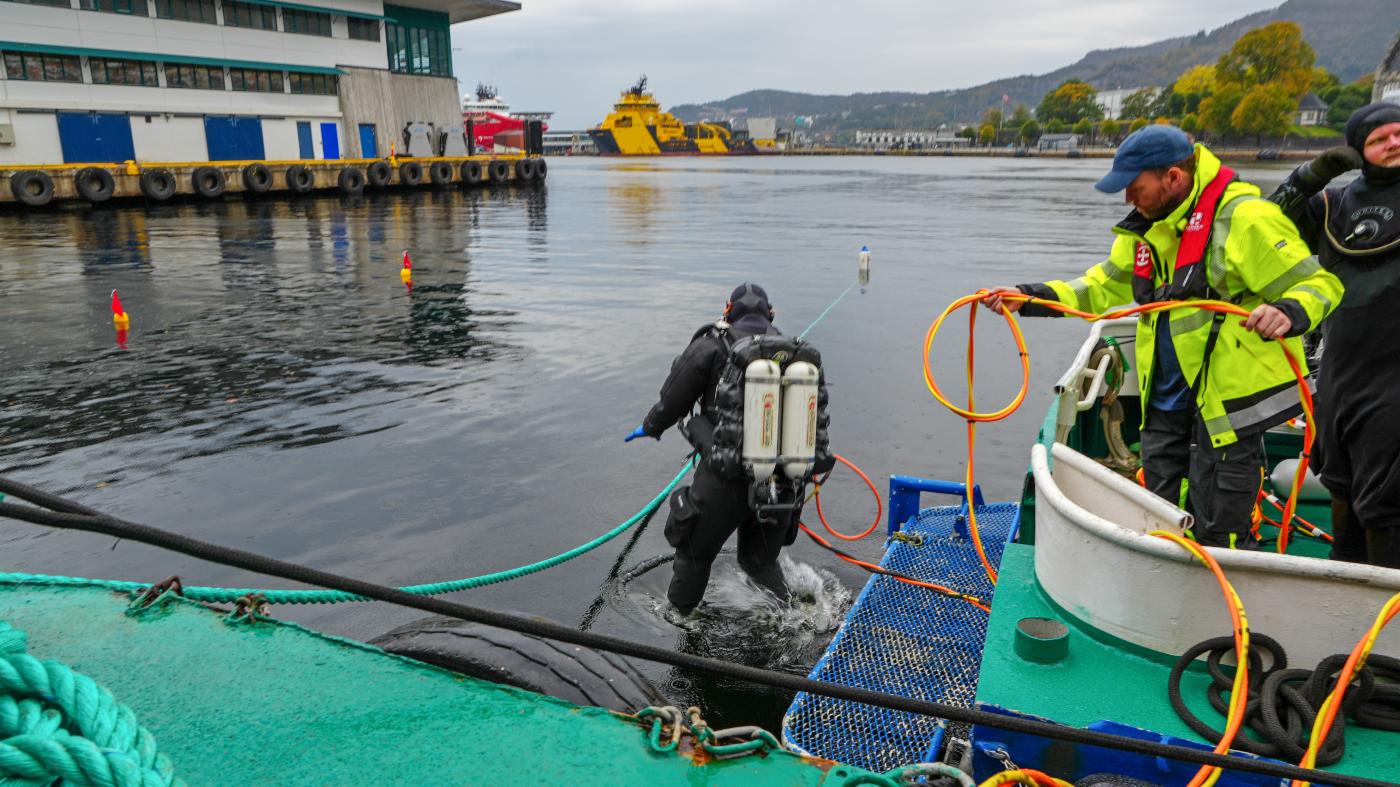
In October, marine archaeologists will explore the seabed in Vågen in Bergen. Their goal is to find traces of nearly a thousand years of urban life and perhaps get closer to understanding how Bergen came to be.
The seabed in Vågen is heavily polluted. At the same time, it is rich in cultural heritage sites. This fall, the first marine archaeological excavations will begin as part of the “Cleaner Bergen Harbor” project.
How old is Bergen, really?
Over the centuries, people have lost and thrown objects from boats and the quayside into Vågen. These artifacts have accumulated layer upon layer on the seabed.
“Vågen is the most important underwater cultural heritage site we have in Norway. It’s located right in the historic heart of Bergen. But how old is Bergen, really? We have evidence of human settlement dating back well over a thousand years, but now we have the chance to get closer to an answer. It will be incredibly exciting to learn more about what the seabed hides,” says Director General of Cultural Heritage Hanna Geiran.
First, cultural heritage sites; then, environmental cleanup
Never before has such a large-scale marine archaeological survey been conducted in Vågen. This is part of the “Cleaner Bergen Harbor” project, a collaboration between the City Environment Agency in The City of Bergen and the Norwegian Environment Agency. The goal of the project is to stop the spread of environmental toxins in the inner part of Byfjorden.
“Before we can clean up the site, we must survey and document the cultural heritage sites. This is a requirement under the Cultural Heritage Act,” explains project manager Anne Christine Knag.
The plan is to excavate five shafts. So far, the project has secured funding for one shaft. This is because Vågen is exceptionally rich in cultural heritage sites, and these sites require more extensive investigation and documentation than in similar cleanup projects.
“ The City of Bergen has taken responsibility for its share and is ready to move forward. For the remaining studies, we need clarification regarding government funding, which is scheduled to cover 75 percent of the costs,” says Knag.
The work that is now beginning is taking place at Munkebryggen, right in front of the site where the bishop had his estate in the Middle Ages.
The excavation is being conducted by marine archaeologists from the Bergen Maritime Museum. The finds will be analyzed by researchers from NIKU, the Norwegian Institute for Cultural Heritage Research.
“It’s particularly rare on a global scale to have a place right in the middle of the city that’s so densely packed with cultural heritage sites. We need to clean up the pollution—and that’s also the goal of the ‘Cleaner Harbor’ initiative—but at the same time, it’s really exciting that Vågen is so interesting from a cultural and historical perspective,” says Eivind Nævdal-Bolstad, City Councilor for Urban Development in The City of Bergen.
May provide new, important insights
Archaeologists hope to find everything from pottery, tools, and ropes to ship parts and dock facilities. The findings may provide new insights into how Bergen developed from the first settlements along Vågen, how trade and seafaring took place—and what people ate.
– This is incredibly exciting! In Vågen, there are traces from many periods of Bergen’s history—perhaps even the very oldest traces? After all, it was Vågen that laid the foundation for the world’s most beautiful city. “The county government is responsible for cultural heritage sites both on land and underwater, and I look forward to the research providing us with new insights,” says County Mayor Jon Askeland of Vestland County.