
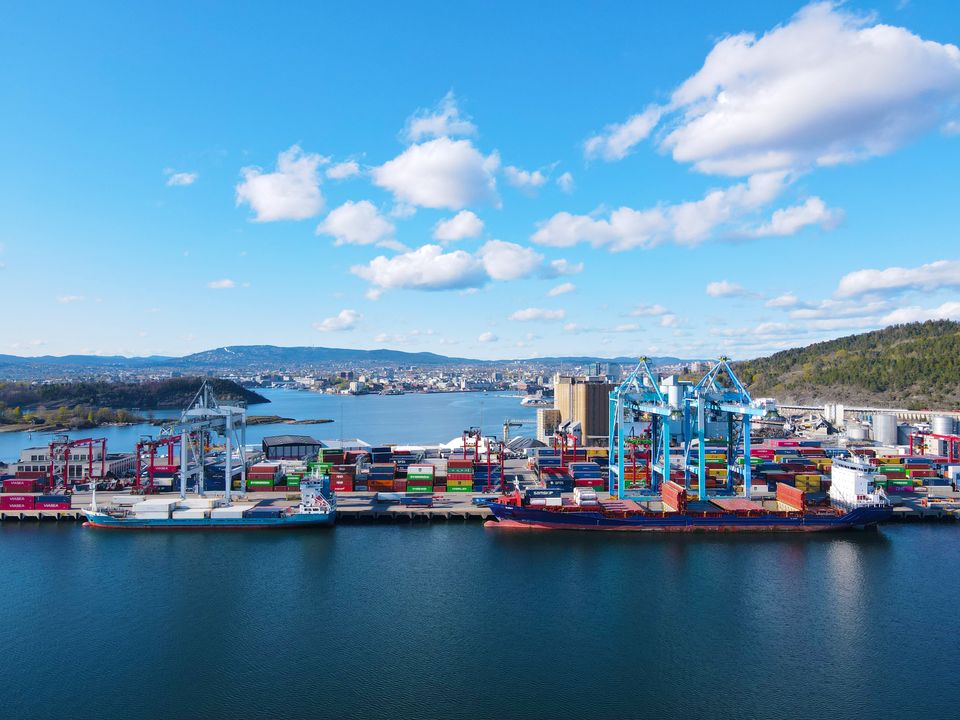
At a time when the role of ports must be balanced against urban development, shifting municipal priorities, and other societal considerations, the need for knowledge-based decisions is becoming increasingly important. The business community depends on good ports, good port facilities, and infrastructure that ensures efficient and safe maritime transport.
Source: Kystverket.no
By Marie Gisetstad Andersen, Senior Advisor at the Norwegian Coastal Administration
and Stefan Ekehaug, Senior Engineer at the Norwegian Coastal Administration
Understanding the Importance of Ports
In 2025, the Office of the Auditor General concluded that the authorities lack an adequate overview of which port facilities are important for public safety, and gave the assessment “reprehensible.” A comprehensive understanding of the ports’ functions is crucial for ensuring the future of maritime transport, emergency preparedness, and national security interests. Ports and municipalities need this comprehensive understanding to make sound decisions when faced with demands for urban renewal and other alternative uses of port areas.
A shared knowledge base regarding ports and their importance will contribute to more knowledge-based management and decision-making, and lead to a greater degree of data-driven insight.
The Port Network—A Complex and Critical System
The port network is both diverse and complex. A port’s location and its functions reflect its importance to society. Access to a large number of port facilities is essential for a well-functioning business sector and crucial for emergency preparedness in critical situations.
Public ports in Norway are primarily owned by municipalities, but their organizational structures vary, ranging from intermunicipal port companies (IKS), municipal enterprises (KF), municipal administrations, and, in some cases, corporations. Although the commercial ports are municipally owned, they are operated as municipal business enterprises and finance their operations, maintenance, and investments primarily through fees and rental income from the business sector. A public port system that ensures access for transport buyers without their own docks is crucial for businesses along the entire coast. These ports fulfill various roles: Some serve as hubs for freight and passenger transport, while others function as transshipment ports and logistics hubs.
Private ports are an important complement to the public port infrastructure. These are often owned and operated by industrial companies such as oil and gas firms, the process industry, or aquaculture businesses, and are generally tailored to the company’s own logistics needs. Although they primarily serve their own operations, many private ports are an integral part of the overall port network and contribute to its total capacity and resilience.
The role of ports in the economy and their role in public safety are interrelated. A port’s location and importance to the economy and freight transport also make it vital to public safety. Both aspects require an understanding of the significance of ports at the local, regional, and national levels.
The Norwegian Coastal Administration as a port authority and a knowledge agency
As the government agency responsible for ports, the Norwegian Coastal Administration shall facilitate the efficient, safe, and environmentally friendly operation of ports (see the main directive dated January 1, 2026). Through the Ports and Waterways Act, the Norwegian Coastal Administration exercises authority on behalf of the Government, with the aim of promoting maritime transport and ensuring a safe and sustainable framework for navigation in Norwegian waters.
Ports are an essential link in the maritime transport value chain. To ensure that ports function effectively and that maritime transport enjoys favorable conditions relative to other interests, the Norwegian Coastal Administration must have up-to-date knowledge of the importance of ports along the entire coast. The Norwegian Coastal Administration considers the entire Norwegian coastline as a whole when municipalities develop land-use plans and provides input on the significance of ports from a regional and national perspective. We do this primarily through participation in the planning process. In addition, knowledge about a port’s significance is important for ensuring maritime security and strengthening the knowledge base for development projects.
The business community depends on good ports
Norwegian ports handle approximately 90 percent of all cargo transported between Norway and other countries, and nearly half of all domestic cargo transport. For maritime transport to function, the ports must function. The business sector depends on good ports, good port facilities, and infrastructure that ensures efficient and safe maritime transport. Ports facilitate both cargo handling and passenger transport. A thorough understanding of the importance of ports leads to better and more targeted consideration of ports in planning processes, as well as more knowledge-based decisions. It also means greater influence when dealing with other parties vying for the same land areas.
The Role of Ports in National Security
Ports serve as gateways to our country for foreign trade and freight transport, and are also of great importance to national security and emergency preparedness. Some ports are vital to Norway’s security of supply, particularly with regard to food supplies. In addition, ports play a central role for the Norwegian Armed Forces and for our NATO allies, especially following the expansion to include Finland and Sweden, during exercises or actual incidents involving the landing of troops and equipment. In such situations, knowledge of vulnerabilities, port facilities, and redundancy will be crucial both for developing effective plans and for providing recommendations when those plans need to be adjusted.
From Fragmented Data to Comprehensive Insights
The Norwegian Coastal Administration works systematically to collect, organize, and further develop the knowledge base regarding Norwegian ports. The goal is to provide a better basis for decision-making for government agencies, port operators, and others who rely on maritime transportation solutions, thereby strengthening our ability to fulfill our public mission.
These insights are based on a combination of proprietary data—such as AIS and SafeSeaNet—open data from agencies such as the Directorate of Fisheries, the Norwegian Maritime Authority, and the Norwegian Mapping Authority, as well as commercial sources such as ship registries. Together, these sources provide a much richer picture than any of them could provide on their own.
In recent years, the Norwegian Coastal Administration has also strengthened its development and analysis capabilities. Through strategic hiring and cross-functional collaboration, the agency has built up internal expertise in model development and programming.
Databricks(a “unified analytics platform” that combines data processing, analysis, and machine learning into a single platform, available on multiple cloud services) has been adopted as a central analytics platform for collecting, processing, and modeling large volumes of port data. The platform makes it possible to combine real-time data from AIS and SafeSeaNet with historical and external data sources in a unified analytics and data environment. This simplifies collaboration across disciplines, ensures traceability in data processing, and enables more advanced insights through machine learning and scalable data processing.
Data Sources, Reliability, and Access
Good decisions require good data. The quality of decisions is directly influenced by the quality of the data. Therefore, it is important to ensure reliability, sound data collection procedures, and frameworks for access and use. A robust, digital knowledge base enables data-driven insights for both the Norwegian Coastal Administration and other decision-makers. We must not only understand individual ports but also the overall infrastructure that supports Norwegian maritime transport. A foundation for an up-to-date knowledge base consists of clear procedures for updating and central documentation, as well as no reliance on individual persons for data collection.
The Balance Between Transparency and Security
As a government agency, the Norwegian Coastal Administration has a fundamental obligation to transparency. We are committed to sharing knowledge with the public and providing the business community with the information it needs to establish itself and grow in the market. Our guiding principle is therefore that data should be created for open solutions and shared freely, as we have done for many years through the Coastal Data Hub, where businesses, students, and individuals have free access to our datasets.
At the same time, data can gain new value when it is linked together from various sources. The Norwegian Coastal Administration must therefore manage data in a way that both safeguards the public interest and protects sensitive information that, either on its own or when combined with other information, may be relevant to national security interests.
Conclusion
Norway’s ports are a critical part of our transportation infrastructure, our supply chains, and our national preparedness. To meet the challenges of today and tomorrow, we must move from fragmented information to shared, data-driven insights.
Through systematic knowledge development, improved access to data, and clear management of its public service mission, the Norwegian Coastal Administration is strengthening its role as both a port authority and a knowledge agency for the benefit of business, safety, and efficient maritime transport along the entire coast.