
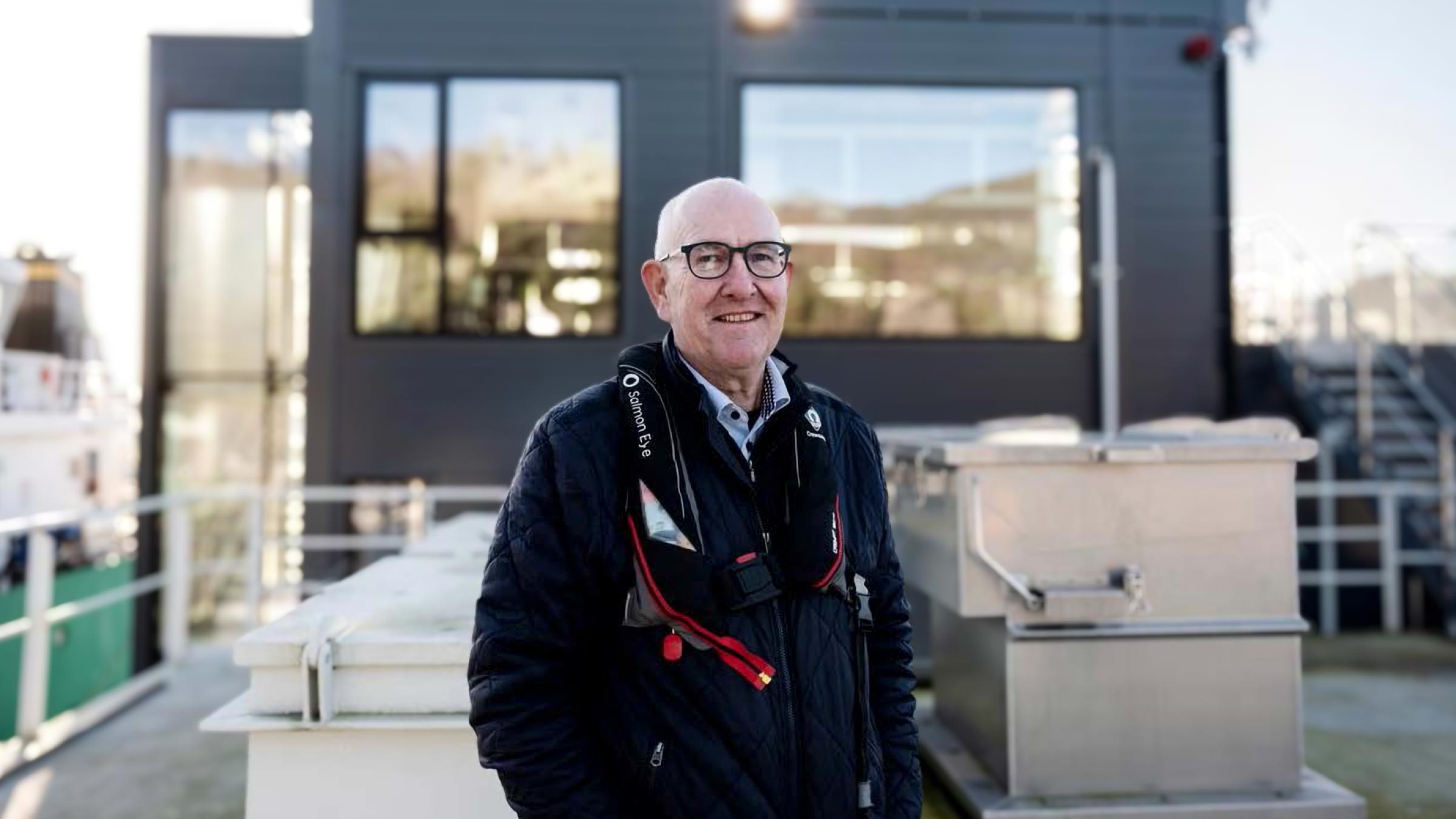
Source: ragnsells.no and Intrafish (This article has been republished with permission)
Ragn-Sells Havbruk wants to build the world’s first plant that converts fish sludge into ingredients for animal feed. The goal is also to help improve the industry’s reputation, says the sludge manager. He has the support of fish farmers.
The factory, which will produce ingredients for animal feed, is scheduled to be completed within four to five years.
Erlend Eide, technical director at Eide Fjordbruk, also believes that this kind of resource utilization can strengthen the industry’s reputation over time.
“Absolutely. Every improvement counts, and this is something many people care about. It also helps build on the efforts to make the aquaculture industry more sustainable and circular,” says Eide.
You can find more information about the price and location further down in the article.
The Ragn-Sells Group is already building similar facilities for human sewage sludge in Germany and Sweden; this technology can also be applied to sludge from the aquaculture industry.
Not approved yet
“We see that fish sludge has far greater value than traditional sewage sludge. That is why this has become one of the Group’s most important focus areas,” says Ole Arthur Vaage, general manager of Ragn-Sells Havbruk.
At present, the only approved uses for fish sludge are the production of biogas and fertilizer. The Norwegian Food Safety Authority, among other agencies, must grant approval for the production of feed for fish and pets.
In Germany, the group is currently building a phosphorus recovery plant at a cost of approximately one billion kroner in collaboration with a local wastewater treatment plant. The plant is scheduled to be completed in 2027.
“Our goal is to establish a similar value chain for the Norwegian aquaculture industry,” Vaage continues.
He adds:
– Cost and location? Well, building the factory will require an investment of just over one billion kroner. The location hasn’t been decided yet, but we’re not far from reaching a conclusion.
Environmental Challenges Piling Up
Environmental challenges are piling up for the Norwegian salmon farming industry: salmon lice, escaped salmon, and environmental impact.
“The aquaculture industry doesn’t necessarily have ‘the best reputation in the world.’ Becoming part of a circular economy where fish sludge is better managed and ends up as feed provides significant environmental benefits, and hopefully, over time, the industry will also gain a better reputation for caring for nature,” says Vaage.
In 2025, the government introduced requirements for sludge collection for use in closed facilities under the BANK program. For the fish pens to qualify for use, they must be able to collect sludge and feed residues. Behind this initiative lies a growing demand for phosphorus in Europe. The EU currently imports a large portion of the phosphorus used in agriculture, including from Morocco, Western Sahara, and Russia.
“Phosphorus is a critical raw material. It is used in fertilizers, animal feed, and, to an ever-increasing extent, in batteries and energy storage. Demand is set to rise sharply in the future,” says Vaage.
He believes that fish sludge represents a significant untapped resource.
– The aquaculture industry holds large amounts of phosphorus. If we can extract this and reuse it, we can reduce the need for imported raw materials while also creating a more circular industry.
Want phosphorus back in the feed
Today, most of the sludge collected by Ragn-Sells is used to produce biogas.
Sludge from fish farms is transported to locations such as Skogn in Trøndelag. In the long term, Ragn-Sells aims to use the phosphorus in the production of fish feed and pet food.
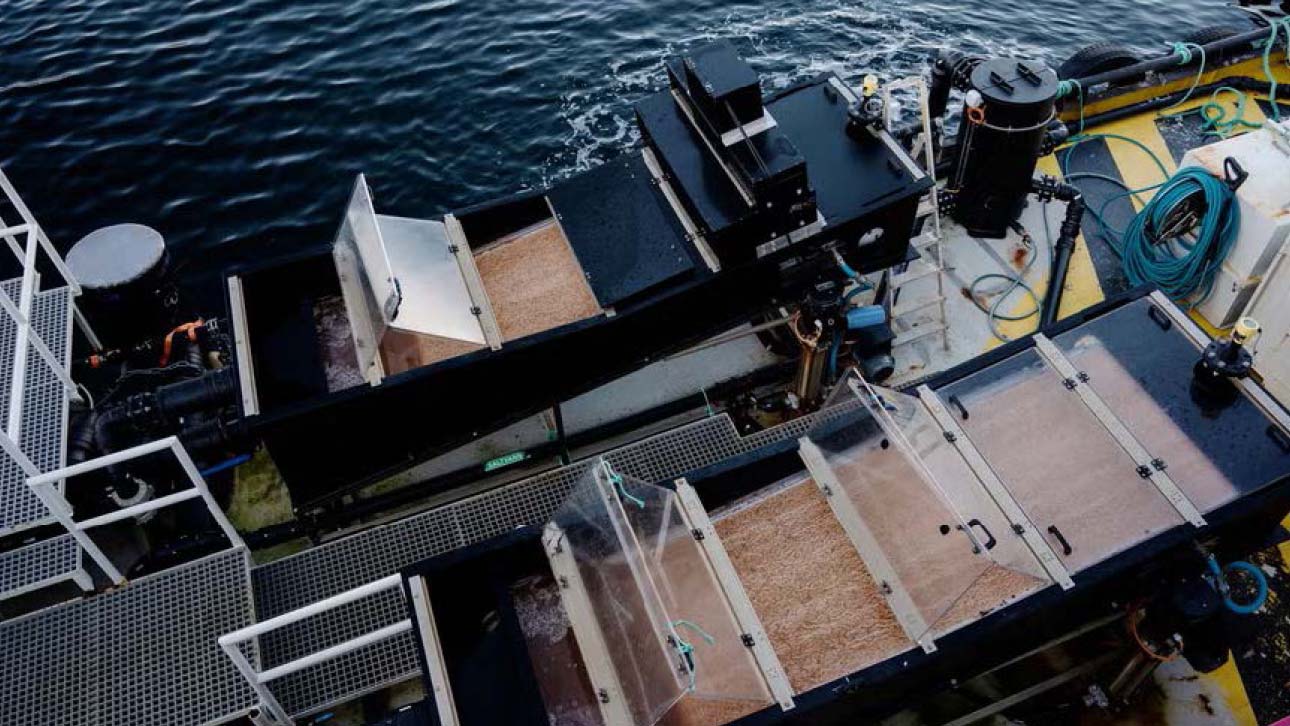
In the AquaPhoenix project, in which Ragn-Sells Havbruk and Eide Fjordbruk are participating, fish sludge is collected, stored, and transported. The goal is to be able to use it for far more purposes than just biogas. (Photo: Elias Dahlen)
“That’s the most exciting application. Our technology can produce phosphorus with a documented purity level that makes it suitable for use in animal feed, but current regulations do not allow that in Europe,” says Vaage.
He points out that the EU has now begun to explorenew uses for recycled phosphorusand animal byproducts.
Calls for clearer regulations
In order to invest approximately one billion kroner in a factory, Ragn-Sells needs more predictable operating conditions.
“We depend on the authorities to create the conditions for testing and development. The technology is there, but the regulations haven’t quite caught up yet,” says Vaage.
He believes that both the Norwegian Food Safety Authority and other government agencies are supportive, but that necessary clarifications are still lacking.
"I wish that those who pollute the least were allowed to produce the most. That's how it is in other industries."
“We need to document what goes into the process and what comes out. It’s only once we have that knowledge in place that major investments can be made,” he says.
Sees a billion-market
Vaage believes there is significant potential if the aquaculture industry were to collect more sludge from open pens.
“If we can extract resources from sludge on a large scale, we’re talking about value chains with annual revenue in the billions of kroner,” he says.
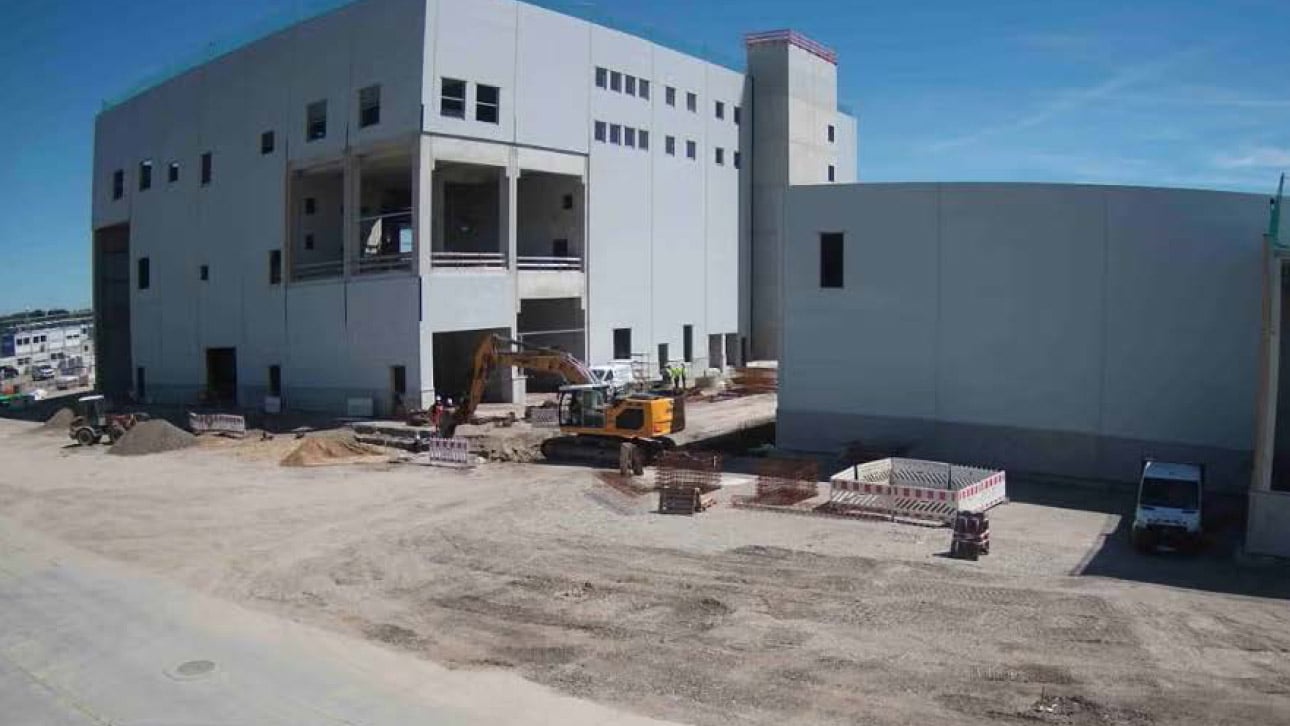
Here is a photo of the factory currently under construction in Germany. The Norwegian factory will have a similar appearance. The location has not yet been decided, but the cost will be just over one billion kroner. (Photo: Ragn-Sells)
At the same time, he believes the industry will eventually face competition.
“Many companies can transport sludge. The real value lies in the technology that can process the resources and extract phosphorus and other minerals. That’s where the real competition will be,” says Vaage.
For Ragn-Sells, this initiative is about more than just waste management.
“If the aquaculture industry can demonstrate that it preserves the resources in the sludge and returns them to the cycle, it results in a completely different environmental footprint than if those resources were lost. That’s where we want to be,” he says.
Need help from shipowners
Ragn-Sells currently collects fish slurry from various fish farming sites using boats. Once a plant begins operations, the company will need even more specialized vessels.
“The regulations for transporting fish slurry have become stricter. The slurry is classified as a partially explosive substance, and we must transport it in chemical tankers. We are in talks with several shipowners who are interested in working with us,” says Vaage.
We ask Vaage whether it should have been mandatory to collect the sludge.
“No, but I wish that the ones who pollute the least were allowed to produce the most. That’s how it is in other industries, and that’s how it should be in aquaculture, too. Everything should be measured in terms of pollution. In my mind, that’s the right approach—for the industry, for Norway, and for the salmon,” says the sludge manager.
It's going to be really exciting
Erlend Eide, technical manager at Eide Fjordbruk, is optimistic that fish sludge could become a raw material for both fish feed and pet food in the future.
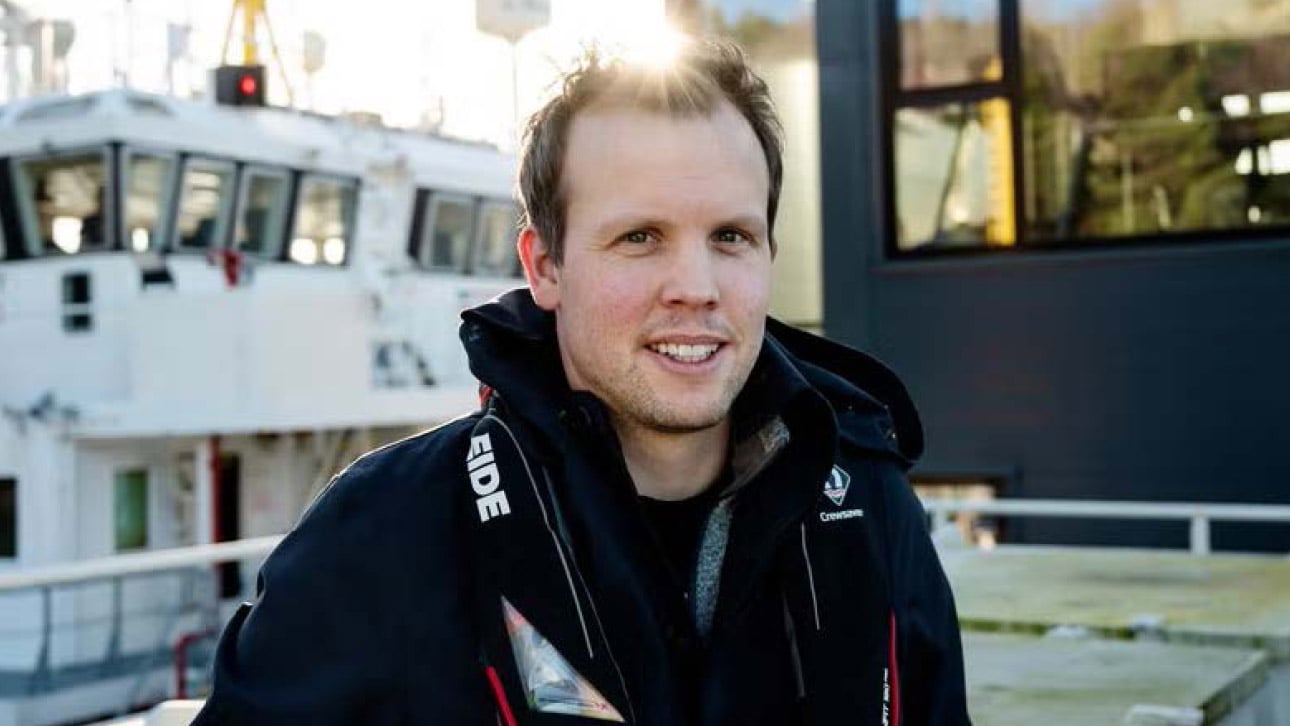
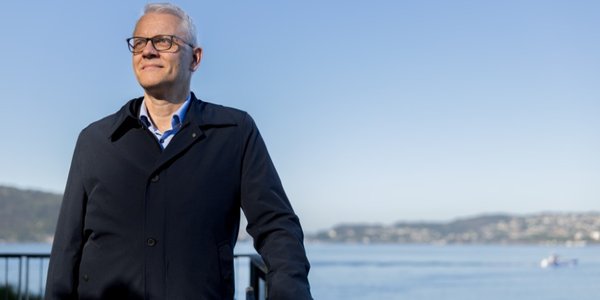
Erlend Eide is the technical manager at Eide Fjordbruk. (Photo: Elias Dahlen)
“We think this is a great idea. When companies collect fish sludge and turn it into resources, it contributes to a more sustainable value chain. Today, fish sludge is used for things like biogas and fertilizer, but its real value lies in its use as a raw material in animal feed,” says Eide.
He emphasizes that the technology is already in place.
“This isn’t something we have to develop from scratch. We already have the technology in place. The sludge is dewatered on a barge, stored in a floating tank, and pumped onto boats for further processing,” he explains.