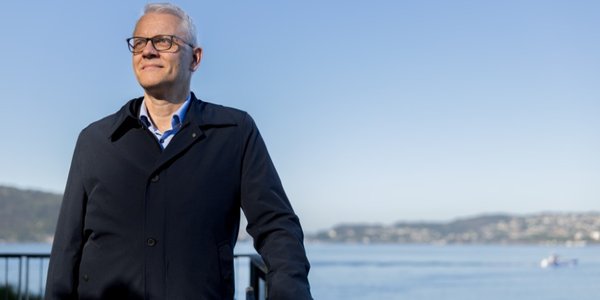

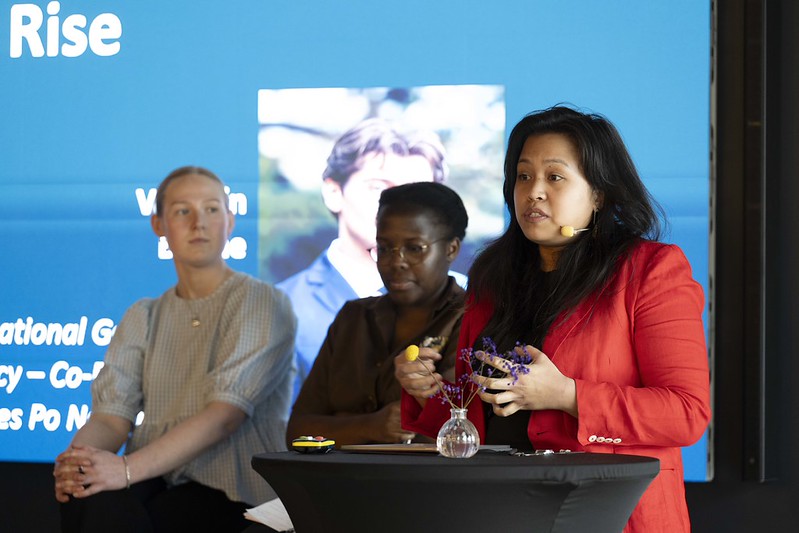
Since One Ocean Week in Bergen in April, One Ocean Youth Panel member Mira Santos has been deep in the final stages of her doctoral work in biological oceanography at MIT/WHOI. Her research examines how coastal plankton communities respond to climate change—and why these microscopic organisms are crucial to both ocean health and global climate balance.
By analyzing 18 years of data from Martha's Vineyard, Mira Santos is investigating how rising sea temperatures affect the timing and extent of phytoplankton blooms. Plankton is the foundation of marine ecosystems, but also one of the planet's most important climate regulators: it absorbs CO₂ from the atmosphere and produces about half of the oxygen we breathe.
"Even small temperature changes can shift the seasons in plankton communities," she explains. "When the timing changes, the effects propagate throughout the food chain—from fish stocks to the ocean's ability to store carbon."
Invisible ecosystems – critical importance
A key finding of the research is how vulnerable these "invisible" ecosystems are, but also how important biodiversity is for resilience. Plankton communities with high species diversity adapt to climate change better than uniform systems.
"We cannot protect what we do not understand," she says. "These organisms are small, but they tell us big stories about the state of the ocean."
From data to action
In addition to her research, Mira is a member of the One Ocean Youth Panel, where she works to translate complex science into understandable messages for decision-makers and the general public.
"Science without communication often remains confined to academic journals. At the same time, political work loses credibility without a solid knowledge base. The combination is crucial," she says.
She believes that this role—at the intersection of research and advocacy—is absolutely necessary in order to address the complex challenges facing the ocean.
Young researchers under pressure
Ahead of the next Youth Panel meeting and One Ocean Week in April 2026, one issue is particularly important to her: better conditions for young marine scientists.
"Research funding in oceanography has been severely cut in the United States. We risk losing an entire generation of researchers just when we need them most."
She calls for international scholarship programs, more cross-border cooperation, and what she calls "radical collaboration"—between researchers, investors, decision-makers, and local communities. This perspective was reinforced during the SOS Summit, where young and established actors met across sectors.
"The ocean does not care about disciplinary boundaries or national budgets. Neither can our solutions."
The ocean's lifeline
If there is one thing she wants decision-makers to understand better, it is the role of plankton in the climate system.
"Every other breath we take comes from phytoplankton in the ocean. Yet they are almost absent from climate policy. When we disrupt these communities, we tamper with the very life support system of the Earth."
When young ocean leaders gather in Bergen again in 2026, she hopes that the message will be clear: protecting the ocean's smallest organisms is not a niche issue, but a fundamental question of climate, food security, and planetary health.
Facts about Mira Santos:
- Country:United States (originally from the Philippines according to some sources; resident in the United States)
- Role in One Ocean Youth Panel:International panel member
- Background:PhD candidate in Biological Oceanography
- Institutions:Massachusetts Institute of Technology (MIT) & Woods Hole Oceanographic Institution (WHOI)
- Research field:Microbial communities in the open ocean; probabilistic models
- Main focus:Marine research, climate, microbiology, science-based marine management
- Current:Participated in the Leadership Workshop during the Sustainable Ocean Solutions Summit (SOS 2025)
- Topics she often raises:The importance of microorganisms for ocean health, young researchers' voices in global ocean policy