
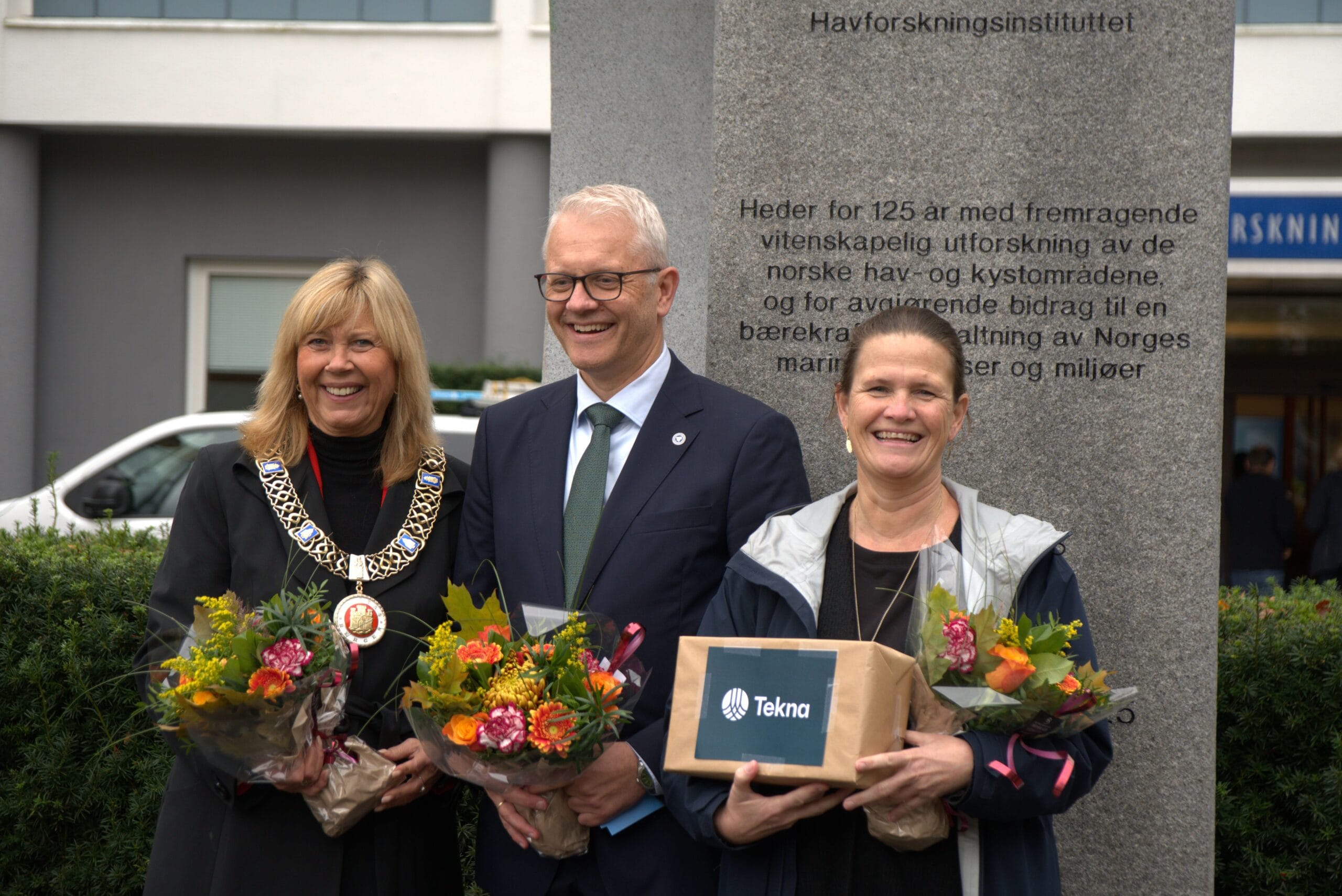
"A perfect opportunity to look ahead," says the marine research director.
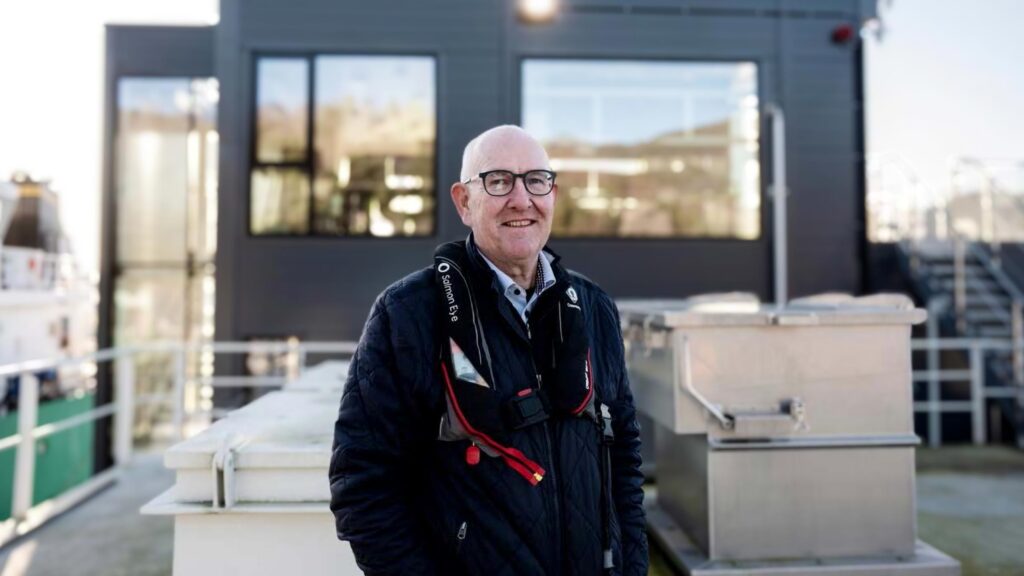
When you're 125 years old, it's important to find the right balance between leaning on experience and finding even better ways of doing things," says Nils Gunnar Kvamstø, Director of the Institute of Marine Research.
When the Institute of Marine Research was founded, it was because people wondered why there were a lot of fish one year and few in another.
- "Today, it's not just about where the fish are and how much of them there are, but about how we're going to take care of the sea and harvest it sensibly for the next 125 years," says Kvamstø.
These challenges will be important
Among the many candidates, Kvamstø points to three challenges he believes will characterize marine research in the future.
- The first is climate change. The sea is getting warmer, and the changes are happening fast. We see it when the mackerel migrate further north, the cod get cramped in the south and the fjords get "hot flashes". Climate change is not something that will happen out there once, it's already happening every day, right here with us.
Kvamstø believes it's important to create good climate scenarios to understand what's happening - and to be able to give good advice on ocean management.
- "Climate scenarios are models for how different temperature changes - development paths for climate change - result in different risks for species, populations and ecosystems," he explains.
Cramped for space along the coast
The second challenge Kvamstø points to is the increasing pressure on the coastal zone:
- Commercial fishing, recreational fishing, aquaculture, outdoor life, tourism, construction, energy extraction; everyone wants a piece of the coast. We need to find out how many interests can live side by side - and without overexploiting ecosystems and marine life.
The concept of "overall impact" is key in this context:
- It's like the TV commercials: it's the bottom line that counts. For a fish, it makes little difference if, for example, depositing gravel in a fjord in isolation has little impact on the environment it lives in. It is the overall impact of all human activity that matters. The gravel can be the tip of the scale that makes it hard for the fish.
Kvamstø says that the Institute of Marine Research has come a long way in creating tools that can be used - by municipalities, for example - to assess the risk that new activity along the coast poses to different species and the ecosystems they live in.
Trust gives knowledge power
The third challenge Kvamstø puts on the table is about trust.
- This is about a problem that has affected the entire public debate. We are seeing an emerging crisis of trust here at home too - because what information can you really trust? This makes it all the more important that we continue to be open and honest when communicating knowledge about the ocean - even when the knowledge is uncomfortable.
- We must clearly explain how we have arrived at the knowledge - so that people out there know that it can be trusted. Research that is not used has little value. The ocean belongs to everyone, and therefore knowledge about the ocean must also be shared," says the Director of Marine Research.
New technology is a key
Kvamstø believes it is essential to use new technology in a good way.
- "Right from the start, knowledge development and technology development have gone hand in hand in marine research. We've gone from ropes and buckets to remote-controlled vessels and artificial intelligence. Today, we have access to enormous amounts of data that can give us a new picture of the ocean - if we use the information wisely.
- So how do we do it?
- I think the principle is pretty straightforward. We need to let technology do what it does best, and use human experience and judgment where machines fall short.
Standing on broad shoulders
On the occasion of the day, Kvamstø also treats himself to a little look in the rear-view mirror:
- In the big picture, marine research is a young science. That's not surprising - large parts of the ocean have been inaccessible to us. But in just a few generations, our knowledge of the ocean has changed dramatically, and an impressive number of myths have been shattered along the way.
As an example, he cites the "migration doctrine" from the 1800s.
- It explained the variations in fishing by the fact that fish had long migrations around the world's oceans. Some even believed that herring lived at the North Pole and that there were ice-free seas there. Now we know that there are different populations of the same species, and that the variations are due to year classes, climate, availability of food, interaction between species and human influence.
The ocean is rich - and vulnerable
Another persistent myth - which lasted much longer - was that the ocean was so big that we could empty anything into it without consequences.
- That idea seems almost unbelievably naive today, when we know how vulnerable ecosystems are to pollution, overfishing and climate change, says Kvamstø, and adds:
- Consider also that British scientists in the 1850s believed that there could be no life in the ocean deeper than 500 meters. Today, we know that the ocean is teeming with life, right down to the deepest trenches. We learn something new every single day, and I'm sure we still have exciting discoveries ahead of us.
Author: Øystein Rygg Haanæs