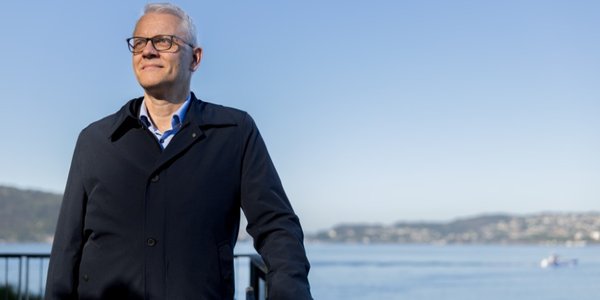

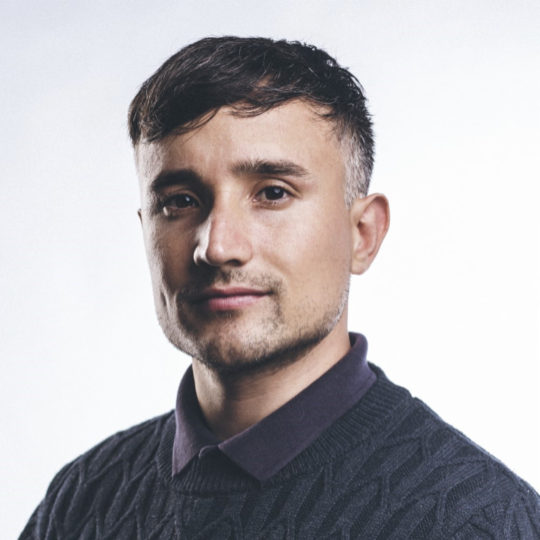
Since One Ocean Week in April, Daniel Cáceres Bartra, marine biologist and member of the One Ocean Youth Panel, has been working at the intersection of science, politics, and youth-led ocean engagement—both nationally in Peru and in international processes.
“My work has mainly focused on three interrelated areas: global ocean management, marine conservation planning, and youth-led advocacy,” says Cáceres Bartra.
Deep-sea mines, conservation, and youth voices
At the international level, he has been actively involved in processes related to global ocean governance, particularly in discussions on deep-sea mining and the protection of biodiversity beyond national jurisdiction.
"I have participated in several meetings and preparatory processes related to the International Seabed Authority, where I have been clear about the need for the precautionary principle, scientific integrity, and consideration for future generations. The deep sea should not be opened up for extraction without solid knowledge and strong environmental frameworks," he says.
At the same time, he continues his work to strengthen the role of young people in ocean policy throughthe Sustainable Ocean Alliance, with a particular focus on Latin America.
"I work closely with young researchers, entrepreneurs, and local communities who experience the consequences of poor ocean management in practice. This provides an important corrective to global narratives," he says.
New marine protected area in the Pacific Ocean
In Peru, Cáceres Bartra is leading an extensive collaboration to establish a new network of marine protected areas in the tropical Pacific Ocean.
"We are working on research expeditions, mapping biodiversity, engaging in dialogue with coastal communities and small-scale fishermen, and political processes with the authorities. The goal is a five-year action plan that combines nature conservation, climate resilience, and local livelihoods," he explains.
He has also played a key role in drafting a bill that has now been submitted to Congress, with the aim of transferring the country's only scientific research institute to the Department of the Environment in order to ensure greater academic independence.
Young people must take leadership
For Cáceres Bartra, the link between the One Ocean Youth Panel and the work of the Sustainable Ocean Alliance is crucial.
"These roles reinforce each other. The Youth Panel provides access to the decision-making rooms where global priorities are set, while the work on the ground ensures that youth participation is knowledge-based, relevant, and action-oriented. Not symbolic," he says.
Looking forward to One Ocean Week 2026
As he looks forward to the next meeting in April 2026, the message is clear:
"We must move from ambition to implementation. Many people are now talking about ocean conservation, but the gap lies in financing, accountability, and actual delivery. Ahead of COP1 (Conference of the Parties) for the BBNJ (Biodiversity Beyond National Jurisdiction) agreement, biodiversity must come first," he says.
At the same time, he warns against new industries being pushed forward without sufficient knowledge.
"A lack of data does not mean a lack of consequences. The precautionary principle must be applied, especially when it comes to deep-sea mining," he emphasizes.
The sense of severity and hope from the fieldwork
Recent fieldwork in northern Peru has made a particular impression.
"I have seen how local fishermen, who were initially skeptical, become strong advocates for conservation when they are included in research and decision-making processes. That gives me hope," he says.
But the vulnerability still persists.
"Ecosystems are extremely fragile, and pressure can escalate rapidly without protection. This gives us a strong sense that we don't have time to wait."
A message to the decision-makers in the north
He has one clear message for decision-makers in cities like Bergen and countries like Norway:
"Peru is both a global biodiversity hotspot and a climate frontline. Decisions made in international forums have direct consequences for our coastal communities. Support is most effective when it strengthens local science, management, and community-led conservation—not when solutions are exported without local adaptation."
Facts about Daniel Cáceres Bartra
- Country: Peru
- Role in One Ocean Youth Panel: Representative for Latin America / Peru
- Background: Marine biologist
- Organization: Sustainable Ocean Alliance (SOA)
- Main focus: Protection of marine areas, youth engagement, sustainable marine solutions
- Current: Participated in the session "One Sustainable and Equitable Ocean" during One Ocean Week
- International work: Active in SOA Hispanoamérica, participates in several global ocean forums
- Topics he often addresses: Marine pollution, marine conservation, coastal communities, global solidarity in maritime policy