
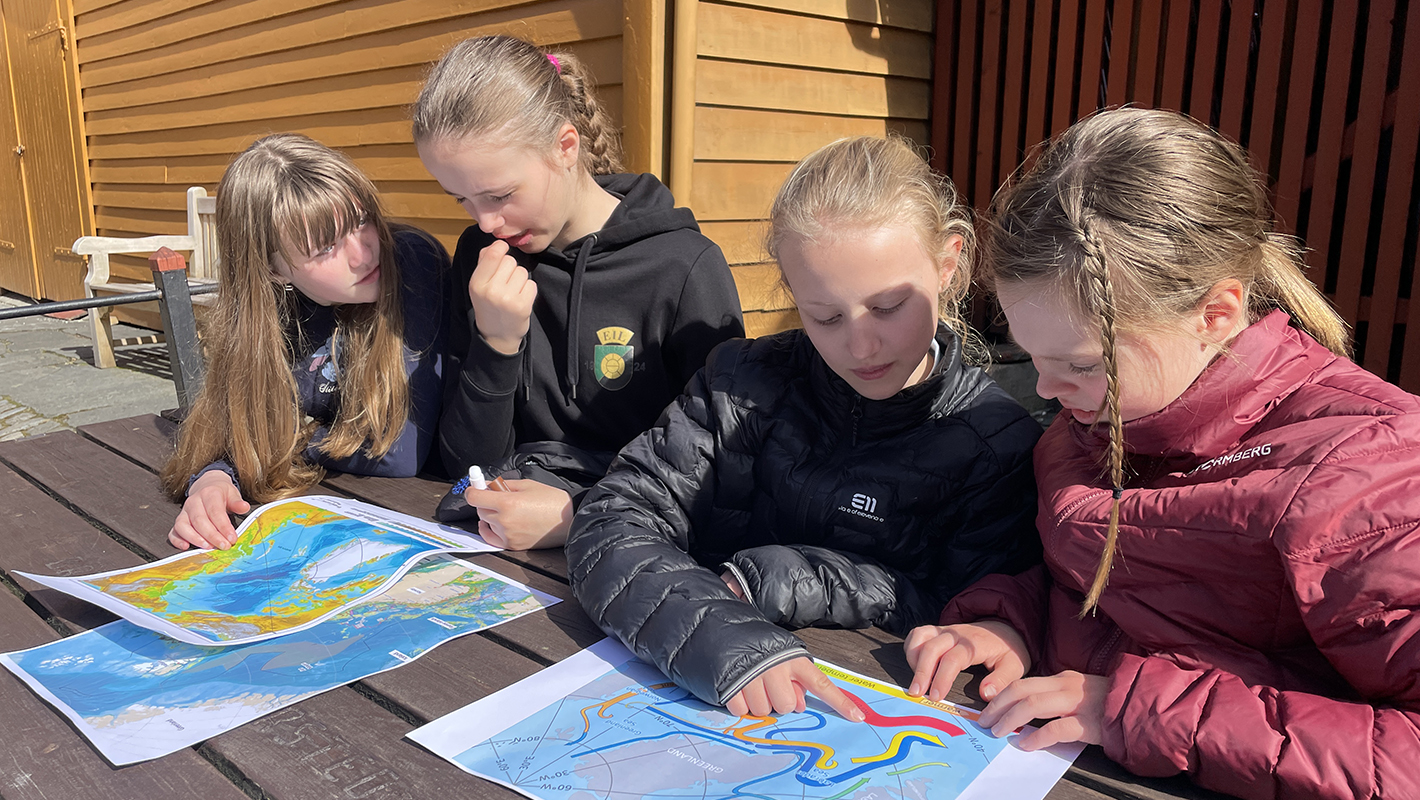
The 5th-grade class at Eidsvåg School visited the UN Association at Bryggen to learn about the UN’s Sustainable Development Goals. The students were particularly interested in the goal of stopping climate change.
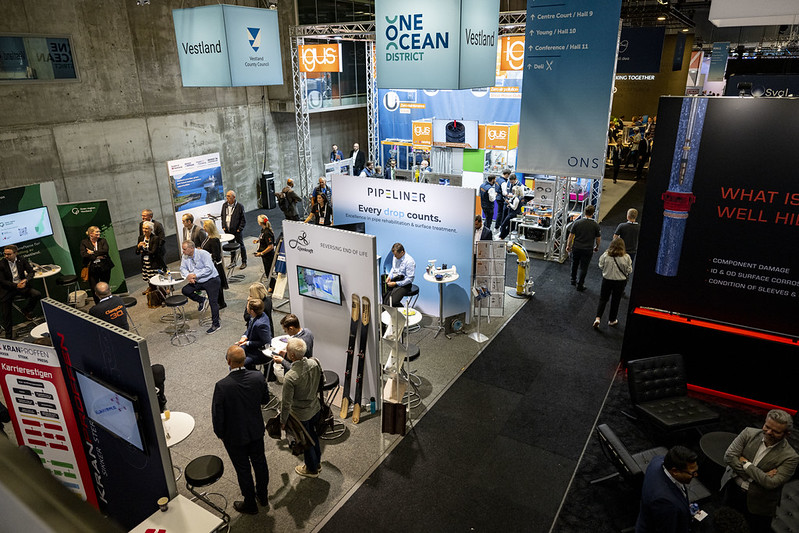
The event is part of the school program duringOne Ocean Week,whichtakes place in Bergen for a week every April. “When we invite school classes to visit us, we help them explore big questions through the things right in front of them,” says Kai Grieg of the UN Association.
How can we get more people to eat more seafood?
Johanna, Gurianna, Saga, and Lerke quickly got to work on their assignment to find ways to get more people to eat more fish and other seafood. They became particularly enthusiastic when it came to suggesting new dishes made with seafood. They flatly rejected mackerel in cucumber. But could fish pizza be a thing, they wondered. Or what about getting more people to eat salmon tacos? The one thing all three 10- and 11-year-olds agreed would definitely be good was crispy and tasty fish chips.
One thing Saga is fed up with is fishing ads.
– In the ads, they show us the whole fish with eyes, tail, and skin. It’s gross! I think it would be better if they showed ready-made fish dishes that look appetizing, like they do in meat ads. They never show a cow in those. I think that might encourage more people to eat more fish.
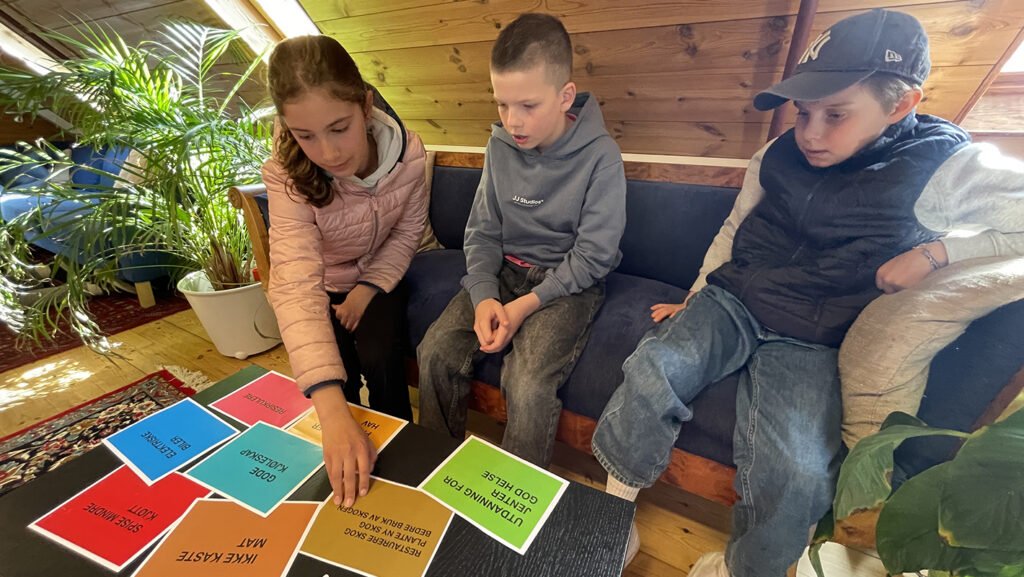
Which measures are most effective in reducing emissions?
The next task for the students was to rank a series of climate measures based on how effective they are at reducing CO2 emissions. This wasn’t easy, and many were surprised by the answer. The answer is that it is restoration, planting, and better use of forests that contribute the most to reducing emissions. Recycling has the least impact. The correct ranking of the measures from greatest to least impact is:
- restore and plant forests and use them better
- solar cells
- onshore and offshore wind turbines
- good refrigerators
- Don't throw food away
- eat less meat
- Education for Girls and Health
- more electric cars
- recycling
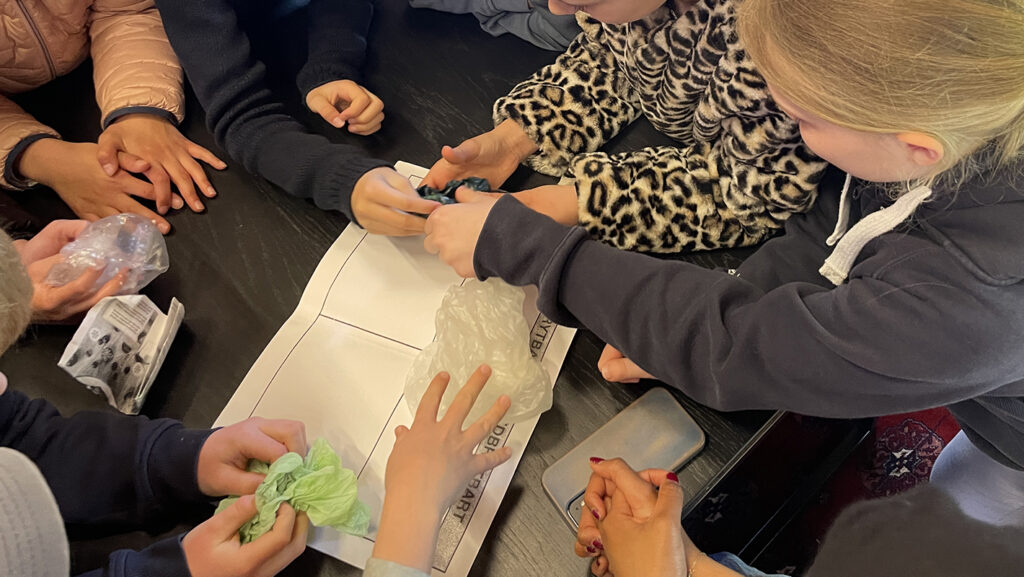
Which type of bag causes the least pollution?
The final task was to determine which type of bag causes the least environmental harm: the freezer bag, the dog waste bag, the biodegradable bag, or the plastic bag? To help them arrive at an answer, the students were given the opportunity to feel the different types of plastic bags.
Not surprisingly, it was the biodegradable bag that took the prize. The biodegradable bag is made from corn and other vegetables. This makes it biodegradable and causes the least pollution.
The UN Association provides information about the UN
The UN Association is Norway’s leading organization for providing reliable, fact-based information about the UN and its work. Since 1946, the UN Association has been working to promote a rules-based and sustainable world. Its primary target audience is children and young people. The UN Association in Bergen is located at Bredsgården in Bryggen. Read more about the school program during One Ocean Week