
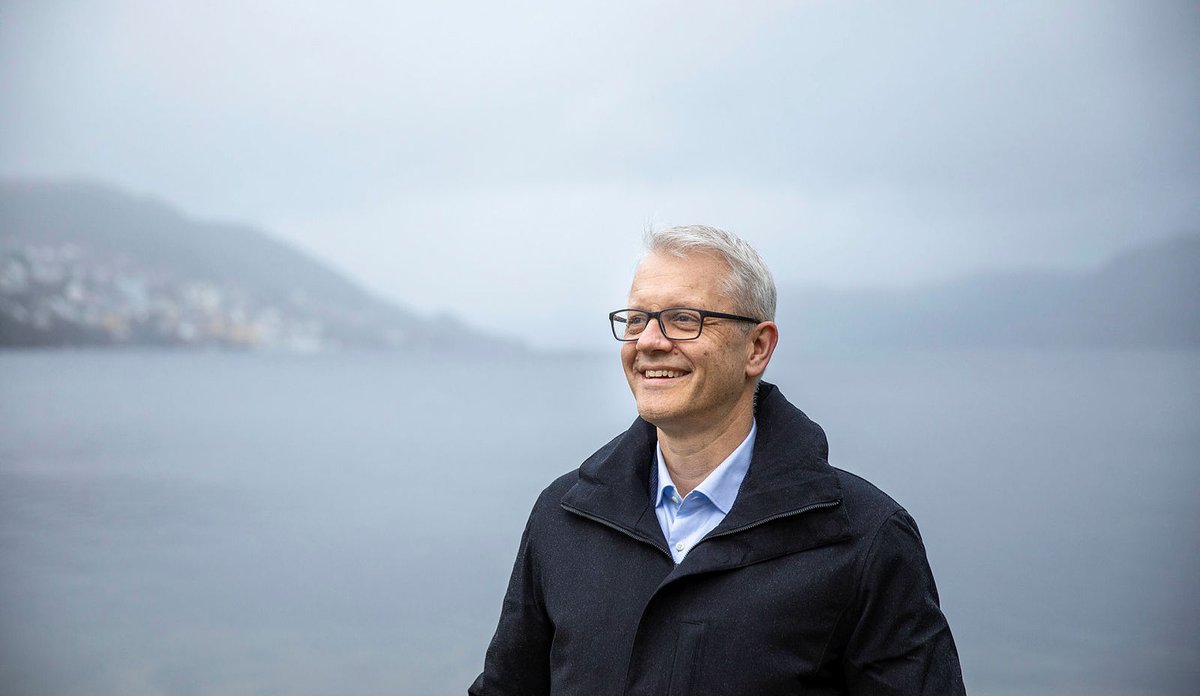
Written by: Øystein Rygg Haanæs/Institute of Marine Research
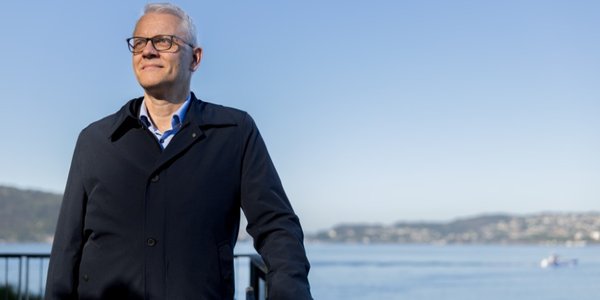
With record warm seas as a backdrop, IMR is entering 2026 with a clear mission: "We will take our knowledge base one step further and develop tools that can be used by management, industries, and policymakers," says Nils Gunnar Kvamstø.
The sea along the Norwegian coast has never been warmer than in 2025. The Institute of Marine Research (IMR) measurements – with time series dating back to the 1930s – show record high temperatures both at the surface and at depth.
"This shows that climate change is happening here and now, along our coast, in our fjords and in sea - that are essential for nature, industries and coastal communities in Norway. Global warming is changing the conditions for life in the sea and shaping new frameworks for ecosystems along the coast," says Director of Marine Research Nils Gunnar Kvamstø.
Developing knowledge for future value creation
2025 also set another record: the value of Norwegian seafood exports has never been higher.
– "It is important that we see these records in context. If we are to further develop value creation from the sea, we must understand what is happening out there. Knowledge about the climate and the interaction between humans and nature is a prerequisite for sustainable fishing and aquaculture," says Kvamstø.
"For HI, it is essential to document changes over time and build new knowledge based on long, coherent data series."
– "If we are to understand what a warmer sea means for the coast and fjords, we must measure systematically in order to distinguish between natural variation and permanent changes in the marine environment." he says.
From research to application
The Director of IMR warns of even greater pressure on the development of services that make research accessible and useful to society.
- "We should not just deliver reports and knowledge bases, but develop tools that can be used by government agencies, industries, and policymakers. User-friendliness and accessibility are key to ensuring that our services create value," he says.
"HI already provides a range of services to aquaculture, marine farming, and fisheries, including jellyfish and algae warnings and calculations of salmon lice spread. Marine researchers have developed highly advanced marine forecasts for the coast, and now a new tool is on the way: Sea Pressure."
- "Havtrykk will provide an overall picture of the pressure on ecosystems along the coast, both from human activity and from climate change. Such a service will provide better answers to how new activity will affect specific habitats for various coastal species, and the basis for overall assessments will be strengthened," says Kvamstø.
Must understand the mechanisms behind the changes
Kvamstø emphasizes that it is important not only to document climate change, but also to understand the mechanisms that drive it.
– "If we understand the causal relationships, we can also predict future developments, which will be of great value to society," he says.
"Understanding the mechanisms is also important in order to explain and predict the local effects of climate change."
"For example, we are becoming increasingly aware that our fjords have different microclimates where the changes are having different effects."
From individual species to whole ecosystems
Kvamstø points out that warming affects many parts of the ecosystem simultaneously – from plankton and seaweed to fish and other marine species:
– When temperature, nutrient availability, and oxygen levels change, it affects the entire food web. Therefore, we must increasingly look at interrelationships, not individual species in isolation.
He says that HI will increasingly move away from advice based on assessments of individual species to assessments of ecosystems as a whole.
The entire toolkit in use
A warmer coastal sea reinforces the need to use more effective measures.
– "This involves everything from more precise fishing technology, which makes us more confident that we are catching the right fish, to marine conservation and a further shift towards ecosystem-based management. This is particularly important for coastal and fjord ecosystems, which are highly vulnerable," says Kvamstø.
He points out that new genetic research has changed our understanding of how vulnerable many of our coastal fish stocks are to local fishing.
– "New analyses show that there are quite small and isolated populations of several species. This is related to the fact that Norway has a coastline where skerries, bays, thresholds, and fjords create barriers to ocean currents and prevent the spread of fish eggs," explains Kvamstø.
The coast is in our DNA
The Director of IMR reminds us how important the coast is to Norway:
– "The fjords and coastline have been our transport routes and food source for generations, and coastal culture is part of our DNA. Understanding what is happening in the sea now means taking responsibility for the future along the coast. This concerns both the environment and what we will live on in the future."
"We will follow developments closely, strengthen the knowledge base, and help ensure that society is as well equipped as possible to meet the changes," concludes Kvamstø.
Institute of Marine Research is a member of One Ocean.
Source: Institute of Marine Research