
Ingeborg Rønning is a Norwegian environmental activist with strong ties to the ocean and nature. She has written a master’s thesis on seabed mining and is currently working on cleanup efforts in the Arctic and community engagement. As a leading member of the One Ocean Youth Panel, she is a clear voice in international efforts to protect the ocean.
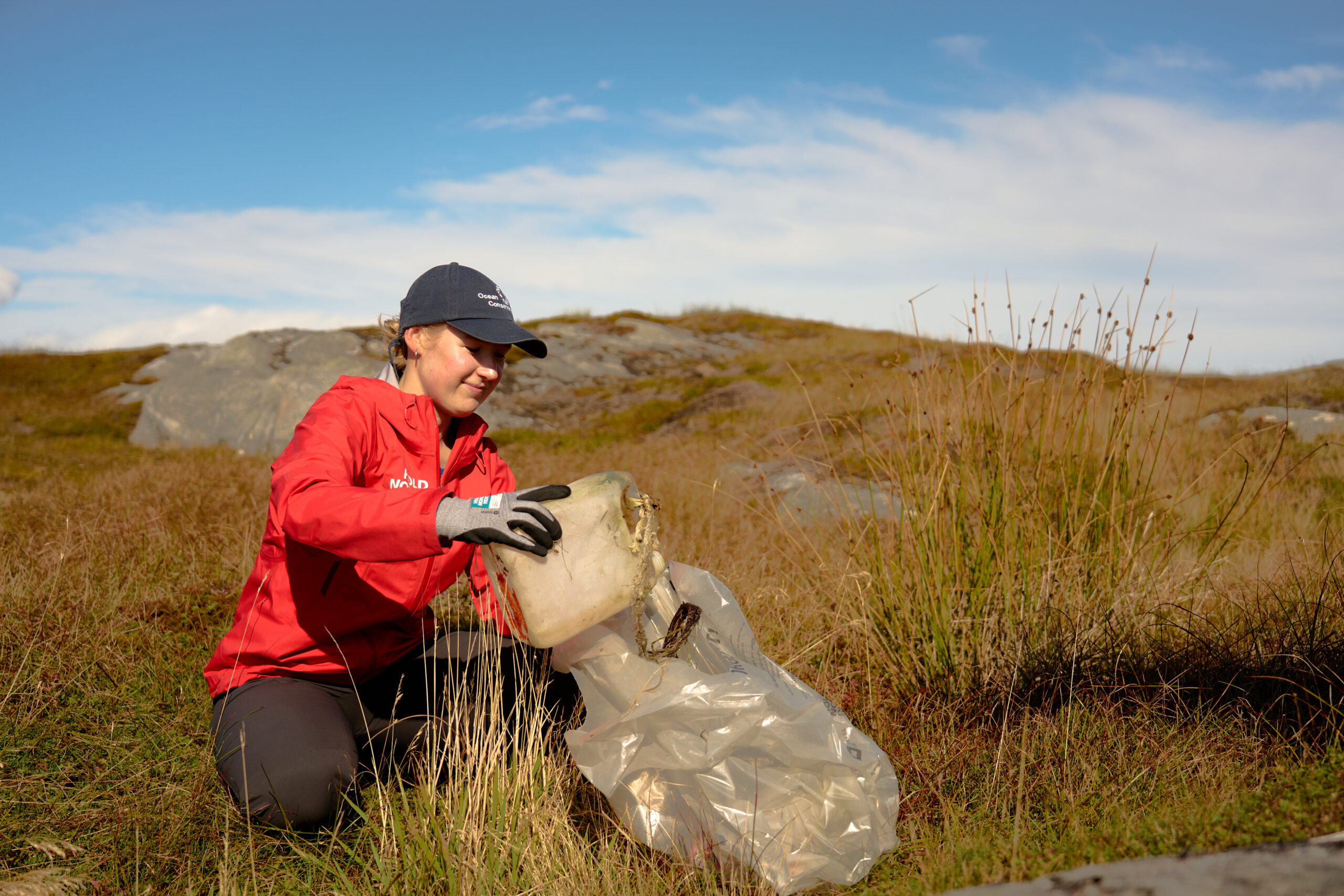
Ingeborg Rønning works at Keep Norway Clean, where she leads projects related to marine litter. The project closest to her heart is the Arctic Clean-Up project, a collaboration with Ocean Conservancy. She has also been a key member of the One Ocean Youth Panel since its inception and is passionate about bringing together young people from various fields who want to influence environmental policy.
A Childhood That Shaped His Commitment
Rønning grew up in an environmentally conscious home where it was natural to take the train instead of driving. She spent a lot of time along the coast, and these experiences instilled in her a strong sense of responsibility toward nature.
“When something threatens the environment—whether it’s marine litter or seabed mining—I can’t just stand by and watch. I have to take action,” says Ingeborg Rønning.
Cleanup in the Arctic: Demanding Work, High Risk
– Cleanup efforts in the Arctic take place under some of the world’s most challenging conditions. The teams face unpredictable weather, permafrost, remote coastlines, and extremely high logistics costs. In areas like Alaska, crews carry out cleanup work while armed to protect themselves from bears. It can also be lonely, which is why I’m working to build a strong network among various cleanup operations throughout the Arctic,” she says.
Why Citizen Science Is Important
In addition to the cleanup efforts themselves, Rønning’s work with Keep Norway Clean also involves collecting data on the waste found during the cleanups. Keep Norway Clean currently has Norway’s largest database of this type of information. The citizen science portal Rydde, which Keep Norway Clean collaborates with, provides us with Norway’s largest dataset on litter.
The most common types of debris include pieces of rope and fishing nets, Styrofoam, and small plastic fragments.
“Citizen science is essential for understanding where waste accumulates and which types are most common. The data helps us identify patterns, determine causes, and hold manufacturers accountable. It also makes us better equipped to prevent problems,” she says.
Trash as a symptom of a larger problem
– Some people argue that litter is a minor problem compared to larger global challenges, but to me, it shows that we have deeper systemic problems—such as overconsumption, capitalism, and the long-standing perception of nature as a suitable dumping ground. Cleanup makes the problem visible and tangible. Large bags of collected plastic make it impossible to ignore. Even more importantly, cleanup brings local communities together. In Norway, volunteer work has always been an important part of efforts to take care of the local environment, says Rønning.
She believes that strong engagement from local communities is crucial to solving environmental problems.
One Ocean Youth Panel – Goals and Ambitions
As a member of the One Ocean Youth Panel, Rønning believes that young people must be given a stronger and more influential role in environmental decision-making.
– The panel’s original goal was to be invited to the table where decisions about the ocean are made, but they quickly realized that simply being present wasn’t enough. If we’re only asked to speak after the decisions have been made, it’s too late. We don’t want to be a checkbox that says ‘youth were present.’ We need to help shape the agenda,” says Rønning.
“Our goal is to develop into an independent entity that is not solely tied to Bergen or One Ocean Week. We want to contribute to international decision-making, use this platform to amplify the voices of others, and exert real influence,” says Rønning.
In the long term, she hopes that the One Ocean Youth Panel can evolve into something similar to a high-level advisory body, but one led by young people from diverse backgrounds with a variety of expertise.