
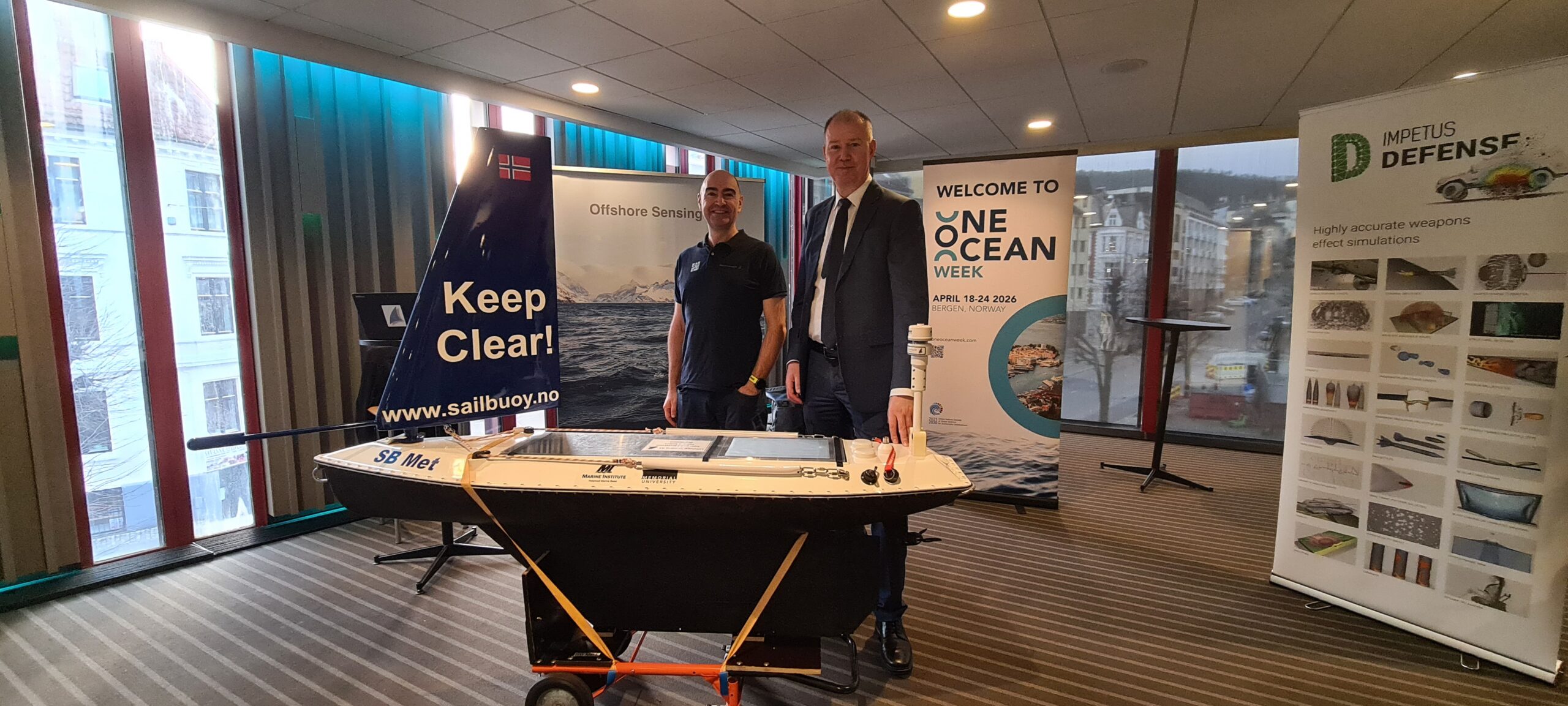
"We are the first in the world to successfully cross the Atlantic with an autonomous vessel," says Max Hartvigsen, CEO of Bergen-based Offshore Sensing.
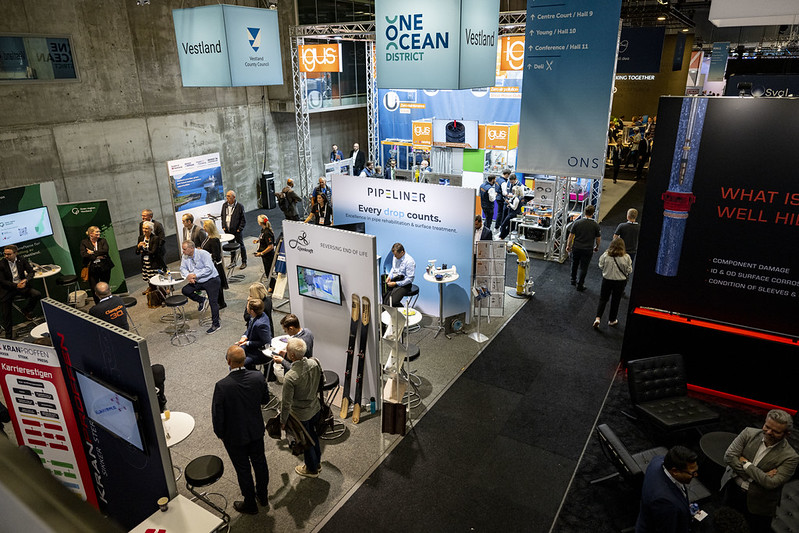
The Defense Conference held in Bergen on Wednesday, February 4, is an important meeting place for decision-makers from the Armed Forces, government agencies, and industry. One Ocean Week was also visible in the mingling area outside the PeerGynt Hall in Grieghallen, where conference participants spent their time between sessions.
Here we also met Max Hartvigsen from Offshore Sensing. The company is a spin-off from Norce (formerly Christian Michelsen Institute).
Hartvigsen presented Sailbuoy, a long-range unmanned surface vessel for use in marine environments. The vessel has been field-tested and can operate at sea for months at a time. It navigates sea areas autonomously and sends data back at regular intervals. Sailbuoy can be used, among other things, to measure sea and atmospheric parameters, to track oil spills, or as a communication relay station for underwater equipment.
"Offshore Sensing is actually also the first in the world to have successfully crossed the Atlantic with an autonomous vessel, and that is the specific vessel we are exhibiting here in the exhibition area," says Hartvigsen.
That was 13 years ago, and the company has since sold more than 35 of these to various parts of the world, where they are widely used in research and data collection in the environmental field.
"They typically collect information about biological data on fish, algae, weather data, CO2, and so on. It's really up to the customers what type of sensors and what data they are looking for," he says.
"It has been used extensively in defense, which is why we are here at the Defense Conference. We have it in the Brazilian, Japanese, and German armed forces, among others, but so far not in the Norwegian armed forces," he says.
Sailbuoy also plays an important role in the research and innovation project GEORGE, which aims to develop the next generation of autonomous ocean observation technology. The project will improve how we globally measure and understand the role of the ocean in the climate system.