
"Ocean Rise and Coastal Resilience" was the theme of the One Ocean Summit in April earlier this year. Bergen became the first Nordic city to join the coalition and network of cities around the world that will share knowledge about the challenges they face in relation to sea level rise. In The City of Bergen , the work The City of Bergen already well underway.

When asked what the future holds for Bergen, Mathiesen says:
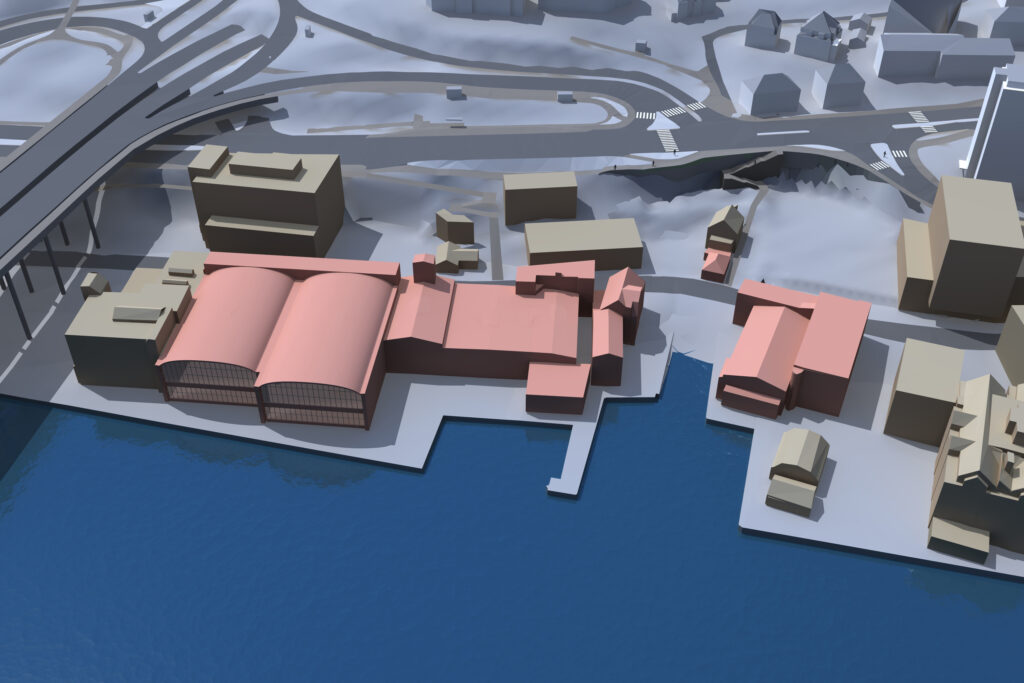
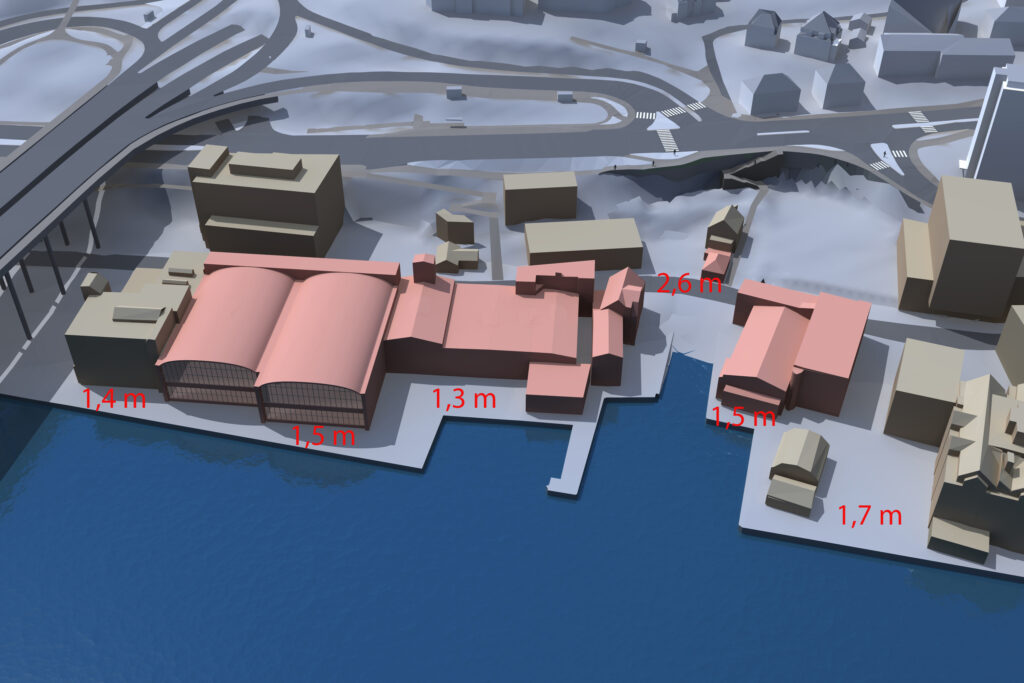
In our assessments, we have used the same climate scenario for sea level rise as the Norwegian Mapping Authority, i.e. a sea level rise of +81 cm by 2100. In addition, we must take into account storm surges, which will cause flooding of areas along the coast. The map illustration shows the situation with a storm surge at elevation 2.41, which in Norconsult's report is estimated to be the height of a 200-year storm surge in 2100, says Mathiesen.
Must prepare the city for rising sea levels and more frequent storm surges
Plans are already in place to prepare the city for the scenarios outlined in the report, which indicate that the city and its residents must be prepared for a wetter future.
The Planning and Building Agency coordinates plans for future development along Puddefjorden and has established a common basis and recommendations for elevation levels for new buildings and infrastructure in the area. We have engaged Norconsult to update previous assessments in light of new knowledge in the climate report from the UN Climate Panel from 2024. The basis is now being used in all plans for the area. We must safeguard new buildings and the lives and health of the population in the future, where we must be prepared for sea level rise and more frequent storm surges. Each plan assesses how waves will affect the areas, as local conditions will determine which solutions will work best. Our work follows the recommendations of the Norwegian Directorate for Civil Protection (DSB) by basing our planning on sea level rise until the year 2100, says Mathiesen.
Bergen is facing a new future – and at the same time one of the city's biggest climate challenges. When Dokken, Laksevåg, and the area around Puddefjorden are to be further developed, future sea levels are an important factor to consider.
New analyses indicate that extreme water levels are occurring more frequently than before. Both The City of Bergen expert communities are clear that if Bergen is to remain a safe coastal city, new buildings and urban spaces must be constructed at higher levels than today.
This does not just mean raising quays and terrain. It means changing our entire approach to how we live, build, and move along the fjord.
New ideas for a new coastal town
Earlier this year, a group of students also received background information from The City of Bergen and carried out a summer project at Sweco. Their proposals are a far cry from traditional port development:
- build on piles that can withstand high seas
- quays that can withstand both storm surges and waves
- self-raising flood barrier
- blue-green zones that dampen water masses and at the same time provide good urban spaces
- ground floors designed to withstand periods of flooding
The proposed changes are not cosmetic, but are described as structural. The students believe this is necessary because climate change is forcing a new way of developing Bergen as a coastal city. The Planning and Building Agency and private developers in the area will take the students' input into account in their further planning work.
Global knowledge and local reality
During the One Ocean Summit, it became clear that the challenges facing Bergen are the same as those that coastal cities around the world are now trying to solve:
How can we adapt without losing the qualities that make life by the sea so attractive? This is where Bergen stands out.
Instead of withdrawing from the sea, attempts are being made to find solutions that allow people to get closer to it, but in a safer and more forward-looking way.
Dokken and Laksevåg are not just urban development projects, but could also provide the answer to how a modern coastal city can cope with rising sea levels while retaining its proximity to the water.
Both Norwegian and international cities are looking for solutions to many of the same challenges associated with rising sea levels in the future. Bergen's participation in the Ocean Rise and Resilience coalition can make a positive contribution to this work.
Below are illustrations from a 3D model of the area around Skjøndal slipway in Indre Laksevåg.
Buildings marked in red in the figures: Buildings with conservation value that will have water against the facade or on the floor in the event of design events.