
Source: Hi.no / Beate Hoddevik
– The deep sea remains one of the least explored areas on our planet. At the same time, we expect it to contain a multitude of animals that we have not yet discovered.
That's according to marine scientist Èric Jordà Molina. He is one of the researchers mapping the Norwegian seafloor in detail through the Mareano program.
“The deep sea is defined as being deeper than 200 meters, but nearly half of the seafloor is deeper than 3,000 meters. In fact, the average depth is a full 3,682 meters,” he says.
In Norwegian waters, such great depths are found in the Norwegian Sea. In these very deep areas, located in the far west of the Norwegian Sea, two Mareano expeditions have been conducted.
A series of extreme challenges
At such great depths, wildlife faces a host of challenges: extreme pressure, total darkness, low temperatures, and a very limited food supply.
The food that many marine organisms eat comes from biological production in the surface layer. This is where phytoplankton grows; it serves as food for zooplankton, which in turn serve as food for larger animals.
Leftovers from this banquet table float on the surface, sinking toward the bottom—but the amounts decrease roughly every meter.
– Only about one percent of the organic matter produced in surface waters reaches the deep-sea floor.
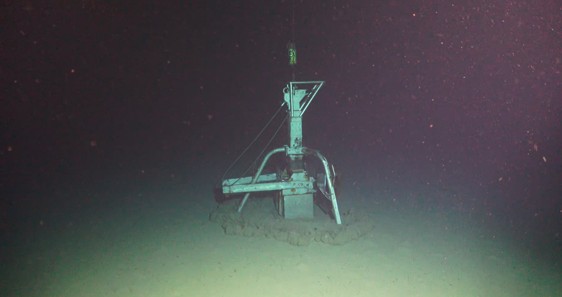
Photo: Mareano / Institute of Marine Research
Extreme Conditions – Extreme Adaptations
“Despite the seemingly inhospitable conditions, deep-sea organisms have developed unique adaptations that allow them to thrive in this mysterious and demanding environment,” says Jordà Molina.
Many of these animals have a relatively simple survival strategy: they stay small.
– Small animals need less energy—and therefore less food—than larger animals do. This gives smaller animals a major advantage when the environment they live in is as resource-poor as the one found in the deep ocean.
Watch out for the deep-sea giants
But of course there are exceptions; some of the species that live several thousand meters below the surface are larger than their relatives that live in shallow water.
– This is a mysterious phenomenon that we call deep-sea gigantism. Examples of such animals include some species of isopods and sea spiders, but we haven’t found any such species in our samples so far.
An impressive number of animals
Even though there are a few giants on the seafloor, the researcher is most interested in the very smallest species found there.
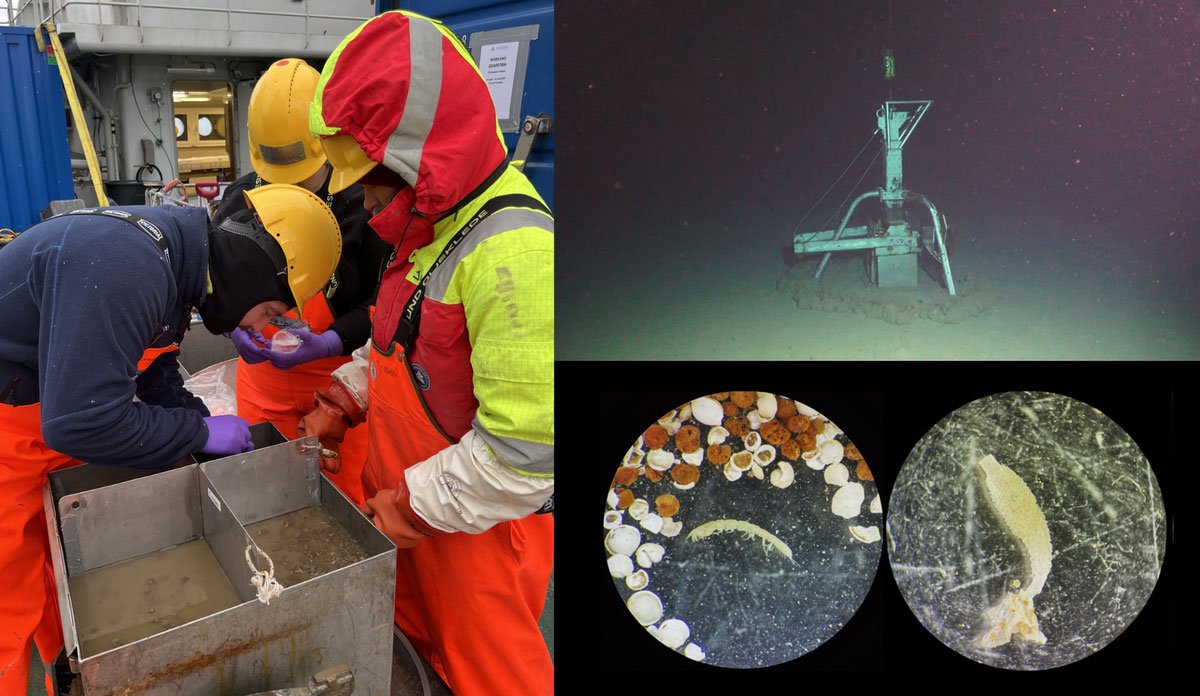
“At first glance, the vast plains of the deep sea may seem empty—only a few animals are large enough to show up in our video footage. But don’t be fooled: down in the sediments, a whole ecosystem is hiding,” he says.
If you look at all the oceans in the world, about half of the total biomass of animals living on the seafloor is found at depths greater than 3,000 meters, according to Jordà Molina.
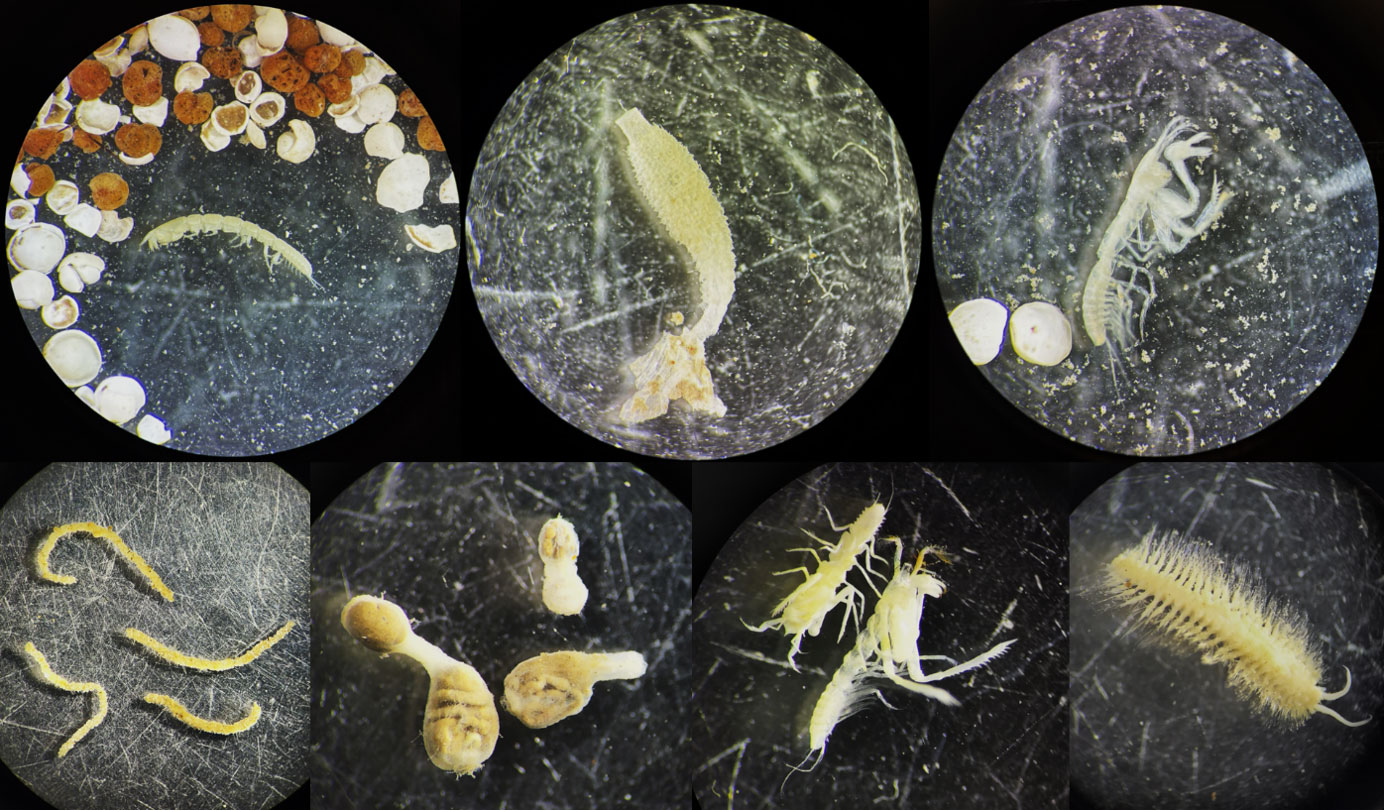
Photo: Ivan Cautain / Emilzen Guinovart Galofré / Institute of Marine Research
These animals live primarily on the vast deep-sea plains, known in scientific terms as abyssal plains.
“These plains are vast, muddy areas that cover about 75 percent of the seafloor. Tiny organisms dominate here,” says Jordà Molina.
Here, researchers find invertebrates ranging in size from 5 mm to 300 micrometers. These are called macrofauna and include, for example, small crustaceans, worms, and shellfish.
– There aren't very many animals per square meter, but there are enough of them to play an important role in the marine ecosystem.
Next comes the meiofauna. These are even smaller, down to 32 micrometers. Large numbers of bacteria also thrive on the deep-sea plains.
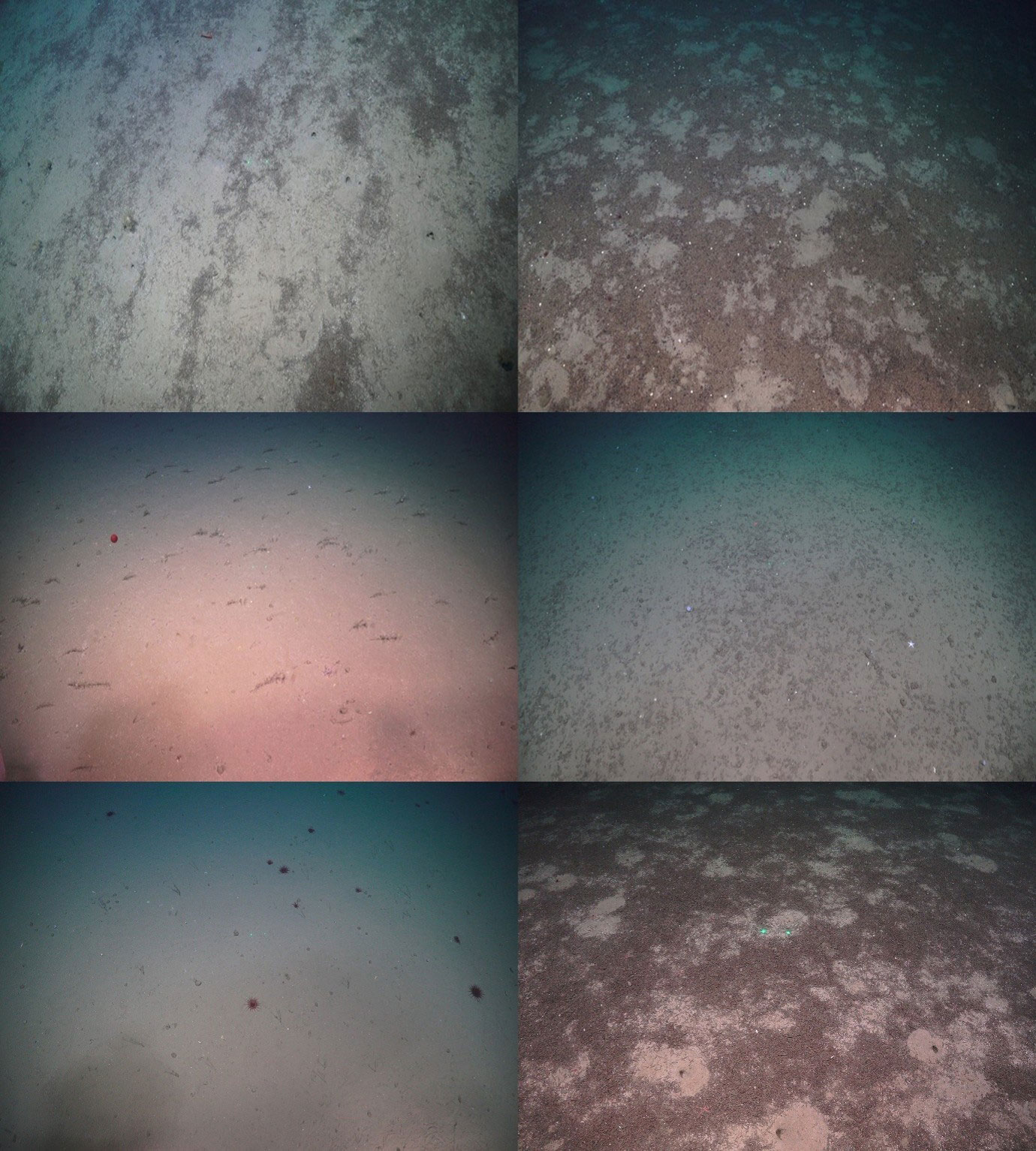
Photo: Mareano / Institute of Marine Research (filmed with the Ægir 6000/NORMAR submersible)
Nutrients from the deep sea are returned to the surface
Bacteria also play an important role in the ecosystem. Down here in the deep sea—often several kilometers below the surface—they act as the ocean’s recycling agency, breaking down the organic material that comes from the surface.
“Bacteria play a key role as a food source for the tiniest organisms and thus form the foundation of the food web,” says Jordà Molina.
Bacteria and the tiny organisms on the seafloor thus utilize the debris from the surface by breaking down the small amounts of organic material that come from the surface.
This process causes various nutrients to accumulate in the deep ocean over time—before they are returned to the surface.
Photo: Rosalyn Fredicksen (Norwegian Directorate of Petroleum)
Ocean circulation carries nutrients back to the surface
– Nutrients are transported back to the surface by ocean circulation. There, they form the basis for new algal blooms, which in turn serve as food for larger species.
Thus, the organisms living in the mud on the seafloor help sustain primary production at the surface.
In addition, deep-sea organisms serve as food and a source of nourishment for other animals in the deep sea.
– The smallest organisms serve as food for the slightly larger ones, and ultimately for fish—such as the charming Dumbo octopus that occasionally appears on our video camera.