Logg inn i medlemsportalen
I medlemsportalen kan du kommunisere med andre medlemmer, dele nyheter og arrangementer og finne informasjon om nettverket.
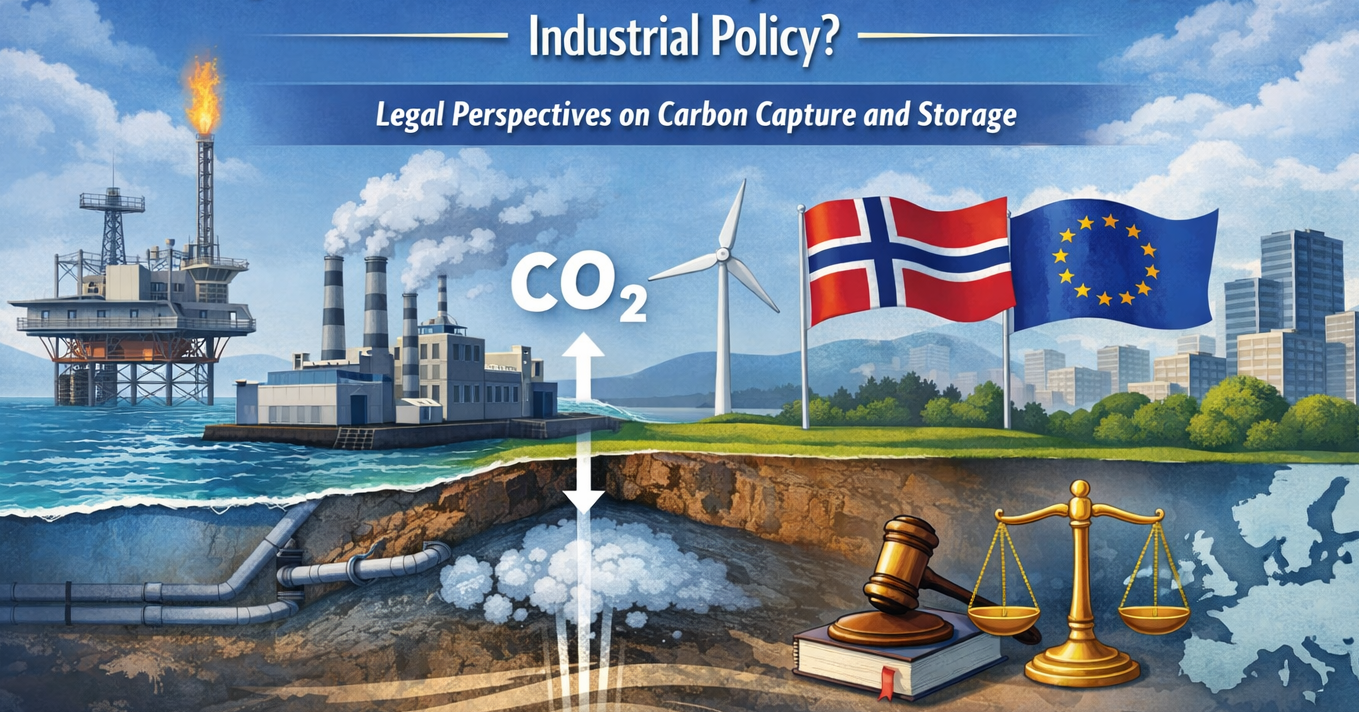
Carbon Capture and Storage (CCS) is increasingly recognised as a key technology in achieving climate neutrality, particularly for sectors where emissions are difficult to abate. Both the European Union and Norway have placed CCS at the centre of their decarbonisation strategies, and recent policy developments—such as the EU Net-Zero Industry Act and the evolving European industrial policy—seek to accelerate the deployment of strategic clean technologies.
At the same time, the large-scale deployment of CCS raises important legal and governance questions. Regulatory frameworks must ensure that CCS projects are developed in a manner that is environmentally safe, economically viable, and socially legitimate. This includes addressing issues related to permitting procedures, liability for stored CO₂, cross-border transport and storage, environmental protection, and the interaction between climate policy and industrial policy.
This event will explore how legal frameworks at both EU and national levels can support the development of CCS as a safe and sustainable technology. Particular attention will be given to the role of Norway as a pioneer in CCS infrastructure and to the implications of the Net-Zero Industry Act for the governance of carbon capture, transport, and storage in Europe.
The discussion aims to bring together legal scholars, policymakers, and practitioners to reflect on how law can facilitate the responsible deployment of CCS while safeguarding environmental integrity and public trust.
