Logg inn i medlemsportalen
I medlemsportalen kan du kommunisere med andre medlemmer, dele nyheter og arrangementer og finne informasjon om nettverket.
*Arrangementet krever påmelding
Coastal ecosystems across Europe are under increasing pressure from nutrient emissions, contributing to eutrophication, oxygen depletion and biodiversity loss. At the same time, global food demand is rising, and ocean‑based food production—particularly aquaculture—must grow within safe ecological boundaries. Achieving this balance lies at the heart of the EU’s Zero Pollution Vision for 2050, which calls for reduced nutrient losses, healthier marine ecosystems and more circular use of resources.
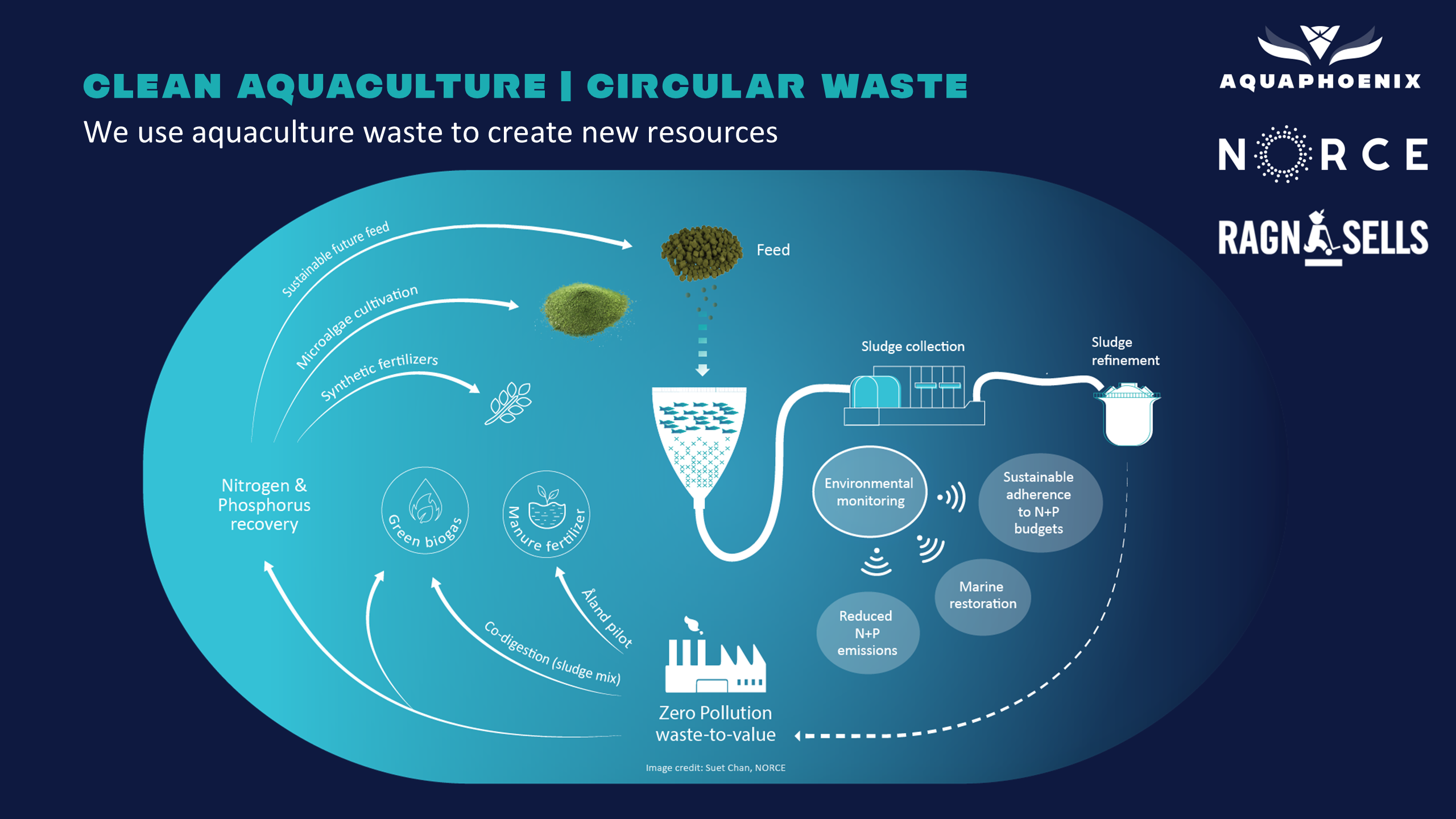
This event explores how innovations in sludge collection, nutrient recovery and circular value chains can reduce environmental pressures while creating valuable products such as sustainable feed ingredients, fertilisers and bioenergy. The Horizon Europe project AquaPhoenix demonstrates this transition at full scale—from fish farm to final products—showing how aquaculture sludge can be transformed into high‑value resources such as feed ingredients, fertilisers and renewable energy. With large volumes of sludge containing significant amounts of phosphorus and nitrogen, the project highlights both the potential for circular nutrient management and the need for enabling governance, regulatory alignment and international cooperation to realize it.
The session also highlights the growing relevance of EU policies shaping the future of ocean governance, including the Marine Strategy Framework Directive revision, the upcoming EU Ocean Act and Water Resilience Strategy, the recast Urban Waste Water Treatment Directive with new phosphorus‑recovery requirements, and the Critical Raw Materials Act, which identifies phosphorus as a strategically important resource.
With contributions from policymakers, researchers, industry actors and international partners, the session will examine how improved governance and cross‑sector collaboration can enable a transition toward circular, low‑impact aquaculture and more resilient coastal ecosystems.
